
Imagine walking in a park and witnessing the effortless connection between a dog and its owner, all through a simple whistle. Intriguing, right?
You might wonder how such a small device can command the attention of a lively pup, and what’s truly happening when that sound fills the air. If you’ve ever found yourself curious about the magic behind dog whistles, you’re not alone.
Understanding what dog whistles do opens a world of insight into how you can enhance your communication with your furry friend. Whether you’re training a new puppy or trying to refine your older dog’s behavior, the secret lies in knowing how these whistles work and how they can transform your interactions. Stick around, because what you’re about to discover might just change the way you and your dog communicate forever.
The Science Behind Dog Whistles
Dog whistles are fascinating tools that leverage the unique hearing abilities of dogs. Understanding the science behind them can enhance your training sessions and deepen your bond with your furry friend. Let’s dive into how these whistles work and why they are so effective.
Frequency And Sound Waves
Dog whistles operate at a frequency range that is usually above the human hearing threshold. Humans can typically hear sounds between 20 Hz and 20 kHz, but dog whistles often emit sound waves in the 23 to 54 kHz range. This means while you may hear a faint noise or none at all, your dog is receiving a clear signal.
Sound waves travel through air and are captured by the ear. Higher frequencies, like those from a dog whistle, can travel longer distances and penetrate through obstacles more effectively than lower frequencies. This makes them ideal for commanding dogs in open spaces or noisy environments.
Why Dogs Hear Whistles
Dogs have incredibly sensitive ears designed to pick up high-pitched sounds. Their ancestors, wolves, relied on these frequencies to communicate over long distances, and this trait has persisted. This allows dogs to respond to whistles even when they are far away or distracted.
Interestingly, each dog whistle can be adjusted to different frequencies, allowing you to find the perfect pitch that your dog responds to best. It might take some trial and error, but finding that sweet spot can make training more effective.
Have you ever wondered why your dog reacts instantly to a whistle but ignores your calls? It’s not just about the sound; it’s about their instinctual wiring. Knowing this, you can use dog whistles strategically to communicate with your pet more effectively.
- Consider using a whistle for recall training—your dog may respond more quickly than to verbal commands.
- Experiment with different frequencies to see which your dog prefers.
- Remember to reward your dog when they respond to the whistle, reinforcing the behavior.
Next time you’re out with your dog, try using a whistle and observe the difference. It’s a simple tool, but understanding the science behind it can change the way you interact with your pet. Are you ready to give it a try?
Credit: p2brelay.com
History Of Dog Whistles
The history of dog whistles is a fascinating journey that intertwines innovation with practicality. Have you ever wondered how a simple tool became an essential part of dog training? The tale of dog whistles is as intriguing as it is informative, offering a glimpse into the evolution of canine communication.
Origins And Development
Dog whistles trace their origins back to the late 19th century. Invented by Francis Galton in 1876, these devices were initially designed as scientific instruments to measure human hearing ranges. However, Galton discovered that dogs could hear sounds at frequencies much higher than humans, leading to the creation of the Galton whistle.
Initially, the purpose was not training but rather experimentation. Over time, people realized the potential of these whistles to send signals to dogs without disturbing human ears. This realization marked the beginning of their journey from laboratories to households.
Evolution In Dog Training
As the use of dog whistles expanded, trainers began to recognize their value in teaching commands and controlling behavior. The ability to communicate with dogs over long distances was revolutionary. Unlike verbal commands, whistle signals could carry farther and remain consistent in tone and pitch.
Many trainers swear by the whistle’s effectiveness in training hunting dogs. Imagine being able to call your dog back from an exciting chase with just a short, sharp sound. The whistle’s unique frequency ensures the dog’s focus, making it an invaluable tool for obedience training.
Have you ever tried using a dog whistle with your pet? The subtle art of mastering whistle signals can deepen your bond with your dog, enhancing communication. The history of dog whistles is not just about the past; it’s about harnessing a tool that continues to evolve in its application.
Types Of Dog Whistles
Dog whistles are fascinating tools that can help enhance your training sessions with your furry friend. They come in various types, each designed to cater to different needs and preferences. Understanding the types of dog whistles available can make your choice more effective and tailored to your dog’s needs.
Silent Whistles
Silent whistles are popular among dog owners who prefer discretion. Despite the name, they produce sound—just at a frequency humans can’t hear. This feature makes them ideal for training in public areas without disturbing others.
These whistles are perfect for sensitive dogs or those easily distracted by environmental noise. My neighbor once struggled with a particularly skittish pup, and a silent whistle became their secret weapon. Would a silent approach work better for your dog’s training?
Adjustable Frequency Whistles
Adjustable frequency whistles offer flexibility, allowing you to find the perfect pitch that your dog responds to best. This customization can be a game-changer, especially if your dog seems indifferent to standard whistle tones.
Imagine having the power to tweak the frequency until you see those ears perk up. This type of whistle can be a fantastic tool if you’re training multiple dogs with different hearing capabilities. Have you ever considered how a simple frequency change might improve your dog’s attention?
How Dogs Perceive Whistles
Dog whistles produce sounds at frequencies dogs can hear but humans can’t. These high-pitched sounds grab a dog’s attention quickly. Used in training, they help communicate commands effectively.
Understanding how dogs perceive whistles opens a window into their fascinating world. Dogs have an amazing ability to hear frequencies that are beyond the human range. This unique skill makes dog whistles an effective tool for communication and training. But how exactly do dogs process these sounds, and what makes them respond?Auditory Processing In Dogs
Dogs have a remarkable auditory system. They can hear sounds ranging from 40 Hz to 60 kHz. In comparison, humans hear between 20 Hz and 20 kHz. This heightened sense allows dogs to detect high-pitched sounds that are inaudible to us, like those from a dog whistle. The structure of a dog’s ear contributes to this sensitivity. Their ear canal is long and curved, helping to capture sound waves more efficiently. This design allows them to pinpoint the source of a sound quickly and with precision. Imagine your dog picking up a faint whistle amidst the hustle and bustle of a park. Their ears perk up, filtering out other noises, and focusing on that specific frequency. It’s as if they have their own secret channel of communication with you.Behavioral Responses
When a dog hears a whistle, several behavioral responses can follow. This can depend on their training and past experiences with the sound. Some dogs may immediately become alert, turning their head or looking towards the sound. This is often a sign of curiosity or recognition. If you’ve trained your dog to associate the whistle with commands, like “come” or “sit,” you might see them responding accordingly. A friend once shared how her dog would sprint towards her at the sound of a whistle, no matter where they were. This reliable response was built through consistent training and positive reinforcement. The whistle became a cue for her dog’s favorite activity—playtime! Have you ever noticed your dog tilting their head when they hear a strange sound? This endearing behavior is their way of trying to understand and locate the source. It’s a reminder of how perceptive and intelligent our canine companions are. Consider incorporating a whistle into your training routine. It can be a powerful tool to capture your dog’s attention, even from a distance. Whether you’re in a crowded park or a quiet backyard, a whistle can bridge the communication gap between you and your furry friend.Training With Dog Whistles
Training with dog whistles can be an incredibly effective way to communicate with your furry friend. Unlike verbal commands, whistles are consistent and can be heard over long distances. This makes them an excellent tool for outdoor training sessions. Whether you’re teaching basic commands or diving into advanced techniques, dog whistles offer a unique method to enhance your pet’s learning experience.
Basic Commands
Dog whistles are perfect for teaching basic commands like ‘sit,’ ‘come,’ or ‘stay.’ Each command can be paired with a unique whistle sound, making it easy for your dog to understand what you want. Consistency is key. Always use the same whistle pattern for each command. This helps your dog associate the sound with the specific action.
Start with short sessions. Gradually extend the duration as your dog becomes more familiar with the sounds. Have you ever noticed how quickly dogs pick up on consistent sounds? Use this to your advantage. Make training a fun and rewarding activity by offering treats or praise when your dog responds correctly.
Advanced Techniques
Once your dog masters basic commands, you can introduce advanced techniques using the whistle. Consider teaching directional commands like ‘left’ or ‘right.’ This can be especially useful for hunting or agility training. Use different whistle patterns for each direction. This can challenge your dog and improve their cognitive skills.
Ever tried silent recall? It’s an impressive technique where a subtle whistle brings your dog back without shouting. Practice in controlled environments first. Gradually increase the difficulty by adding distractions. This builds your dog’s focus and responsiveness. Keep it engaging by varying your whistle tones and commands. Your dog will enjoy the mental stimulation, and you’ll enjoy the results.
Benefits Of Using Dog Whistles
Dog whistles emit sounds that are inaudible to humans but clear to dogs. They aid in effective training and command delivery. These whistles help capture a dog’s attention without disturbing the surrounding environment.
Dog whistles provide several benefits for dog owners and trainers. These small tools can enhance communication and improve training efficiency. Let’s explore how these benefits make dog whistles a valuable tool.Enhanced Communication
Dog whistles help improve communication between dogs and their owners. The sound of the whistle travels long distances. It can be heard even in noisy environments. This ensures your dog hears commands clearly, even if far away. Different whistle sounds can signal various commands. This variety helps dogs understand what is expected of them.Improved Training Efficiency
Training becomes more efficient with dog whistles. The consistent sound of a whistle grabs a dog’s attention quickly. This reduces training time significantly. Dogs respond better to high-pitched sounds than human voices. Whistles help in giving clear and consistent cues. This consistency aids in faster learning and obedience.Challenges And Limitations
Understanding dog whistles involves recognizing subtle signals often used to convey hidden messages. These tools can be ambiguous, leading to misunderstandings. The challenge lies in deciphering intended meanings without context, posing limitations in communication.
Dog whistles are popular training tools, but they come with challenges. Understanding these challenges helps you make better decisions for your dog’s training. Let’s explore some common issues with dog whistles.Potential Misuse
Dog whistles can be misused easily. Some people use them without proper knowledge. This can confuse the dog rather than train it. A whistle’s sound may annoy or stress your dog. This leads to unwanted behavior. Using the whistle too often can reduce its effectiveness. Dogs may ignore it if they hear it all the time.Effectiveness Across Breeds
Not all dogs respond the same way to whistles. Different breeds have different hearing abilities. Some breeds may not react at all. A dog’s age can also affect its response. Puppies might find whistles intriguing. Older dogs might not care. Training methods vary across breeds. One breed might learn quickly with a whistle. Another breed might need other cues. Understanding your dog’s breed helps you choose the right tools.
Credit: www.walmart.com
Choosing The Right Dog Whistle
Choosing the right dog whistle involves more than picking a random model. Different whistles serve different purposes, catering to unique training needs. Understanding these nuances ensures effective communication with your pet.
Factors To Consider
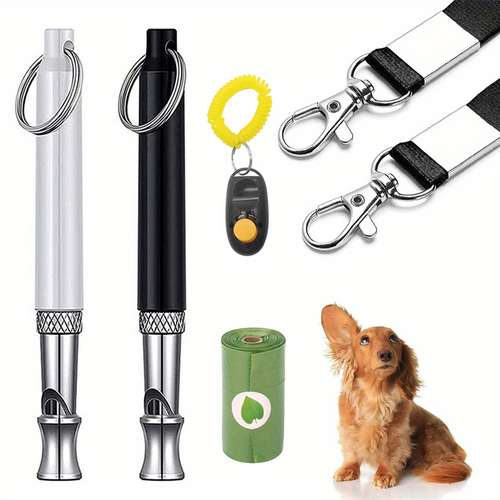
Consider the type of training you plan to conduct. Some whistles are better for recall, while others aid in stopping unwanted behavior. Evaluate the material of the whistle. Stainless steel offers durability, whereas plastic may be more affordable. Frequency range is crucial. Dogs respond to various pitches, so select a whistle that suits your dog’s hearing. Size matters too. A compact whistle is easy to carry and use discreetly.
Popular Brands And Models
Acme Whistles is a trusted name in the industry. Their 210.5 model is popular for its high-pitched sound, ideal for recall. SportDOG’s Roy Gonia Special Whistle is favored for hunting. Its pea-less design prevents clogging. Fox 40 offers a range of versatile whistles suitable for all training levels. Each brand brings unique features. Explore options that align with your dog’s needs.
Future Of Dog Whistle Technology
The future of dog whistle technology holds exciting possibilities. As technology advances, dog whistles are evolving beyond simple sound tools. These innovations aim to enhance communication between humans and dogs. With new developments, dog whistles could soon offer more than just sound-based commands.
Innovations In Canine Communication
Researchers are exploring how to integrate smart technology into dog whistles. These devices could connect to apps, offering detailed feedback on dog responses. Adjustable frequencies might allow for personalized commands. This could improve training sessions and strengthen the bond between pets and owners.
Other innovations include using visual signals alongside sound. This dual approach might help in training dogs with hearing impairments. By combining sound and sight, trainers can deliver clearer messages.
Potential For New Applications
Future dog whistles might serve beyond basic training. They could play a role in dog safety and welfare. For example, whistles could be used in search and rescue missions. Their sound can guide dogs to specific locations, assisting in finding missing persons.
In therapy, dog whistles might help calm anxious dogs. Specific sound patterns could soothe dogs during stressful situations. This could be beneficial in shelters or veterinary clinics.
As technology progresses, the uses of dog whistles will likely expand. These advancements promise to deepen our understanding of canine behavior and enhance the way we interact with our furry friends.

Credit: eurotradefish.com
Frequently Asked Questions
What Is A Dog Whistle Used For?
Dog whistles are tools for training dogs. They emit high-frequency sounds that guide and control canine behavior. Trainers use them for commands like sit, stay, or come. The sound is often inaudible to humans but grabs a dog’s attention effectively.
How Do Dog Whistles Work?
Dog whistles work by emitting high-frequency sounds. These frequencies are often beyond human hearing but within a dog’s range. This unique sound captures a dog’s attention, making it useful for training. It can cut through background noise, ensuring your dog hears your command.
Are Dog Whistles Safe For Dogs?
Yes, dog whistles are generally safe when used properly. They are designed to emit sound frequencies that dogs can hear without causing harm. It’s important to use them in moderation and ensure the sound is not too loud. Consult with a professional trainer if unsure.
Can All Dogs Hear A Dog Whistle?
Most dogs can hear dog whistles due to their sensitive hearing range. However, some older dogs or those with hearing impairments might not respond. It’s essential to test the whistle’s effectiveness with your dog. Adjustments may be needed for individual hearing capabilities.
Conclusion
Dog whistles serve as essential communication tools for training. They offer clarity and precision, helping guide your dog effectively. Their sound reaches long distances, making outdoor training easier. Dogs respond well to these high-frequency sounds. This ensures better obedience and safety.
Consistent use creates a strong bond between you and your pet. It’s important to choose the right whistle for your dog’s needs. Practice patience and keep training sessions short. With time, you’ll see improvements in behavior and response. Remember, a well-trained dog is a happy dog.
Enjoy the journey of learning together with your loyal companion.


