Can I Give My Dog Human Omega 3? Essential Insights
Senior Canine Nutritionist & Dog Behavior Specialist at Cozy Dog Go Wellness Lab
Imagine watching your dog race around the yard with boundless energy, or curl up next to you with a glossy, healthy coat. You’ve heard about the benefits of omega-3 for humans, and you’re wondering if these same benefits could enhance your dog’s health.
You’re not alone in this curiosity. Many pet owners like you are seeking ways to improve their furry friend’s well-being. But can you give your dog human omega-3 supplements? Understanding what’s best for your pet can be challenging, but it’s crucial for their health and happiness.
Let’s dive into whether human omega-3 is safe for your dog, and explore the best ways to support their vitality. Your dog’s health is important, and the answers might surprise you. Don’t miss out on this essential information.

Credit: www.amazon.com
Understanding Omega 3
Giving human Omega 3 supplements to dogs is generally safe, but dosage is crucial. Consult your vet for proper guidelines and ensure the supplement is free from harmful additives. Omega 3 can support your dog’s joint health and coat shine.
Understanding Omega 3 Omega 3 fatty acids are crucial for both humans and dogs. They support heart health, reduce inflammation, and improve brain function. Understanding these benefits can help in making informed choices for your pet’s health.What Is Omega 3?
Omega 3 is a type of polyunsaturated fat. It is essential for overall well-being. The body cannot produce these fats naturally. So, they must be obtained through diet or supplements. For dogs, omega 3 plays a vital role in maintaining a shiny coat and healthy skin.Types Of Omega 3 Fatty Acids
There are three main types of omega 3 fatty acids:- ALA (Alpha-linolenic acid):Found in plant oils like flaxseed.
- EPA (Eicosapentaenoic acid):Found in fish oils such as salmon.
- DHA (Docosahexaenoic acid):Also found in fish oils, crucial for brain health.
Benefits Of Omega 3 For Dogs
Omega 3 fatty acids are not just beneficial for humans; they offer several advantages for our furry friends too. If you’re wondering whether you should give your dog human Omega 3 supplements, understanding the benefits can help you make an informed decision. Let’s dive into how Omega 3 can enhance your dog’s health and well-being.
Improved Skin And Coat Health
Omega 3 fatty acids can work wonders for your dog’s skin and coat. Have you noticed your dog’s coat looking dull or their skin feeling dry? Omega 3s can help restore the natural shine and moisture. These fatty acids reduce inflammation and promote healthy skin cells, leading to a softer, shinier coat.
Imagine your dog strutting with a glossy coat that even other dog owners envy. A simple addition of Omega 3 could make this a reality.
Joint Health And Mobility
As dogs age, joint health becomes a concern. Omega 3 fatty acids are known to support joint health and improve mobility, especially in senior dogs or those with arthritis. They help reduce stiffness and inflammation, making it easier for your dog to move around.
Think about your dog being able to play fetch without the struggle or discomfort. Omega 3s can be a natural way to support their active lifestyle.
Heart Health And Longevity
Your dog’s heart health is crucial for their overall well-being and longevity. Omega 3 fatty acids contribute positively to cardiovascular health by reducing triglycerides and supporting normal blood circulation. They can aid in maintaining a healthy heart rhythm and blood pressure.
Wouldn’t it be comforting to know you’re taking steps to help your dog live a longer, healthier life? Adding Omega 3 to their diet could be a simple yet effective measure.
Sources Of Omega 3 For Dogs
When you think about boosting your dog’s health, Omega 3 fatty acids might come to mind. These essential fats are known for their benefits, including promoting a shiny coat, reducing inflammation, and supporting overall wellbeing. But where can you find Omega 3 suitable for your furry friend? Let’s explore some natural sources that can seamlessly fit into your dog’s diet.
Animal-based Sources
Animal-based Omega 3 sources are often rich and potent. Fish oil tops the list, renowned for its high EPA and DHA content. You might have heard about salmon oil, a favorite among many dog owners.
- Salmon Oil: Contains high levels of Omega 3, making it a popular choice for dogs. It helps maintain healthy skin and joints.
- Sardine Oil: Another excellent source, offering similar benefits. It’s also generally more sustainable than larger fish.
- Krill Oil: Known for its antioxidant properties, krill oil is a powerful source of Omega 3 that can support your dog’s heart health.
Have you noticed a change in your dog’s coat after adding these oils to their diet? Many pet owners report a softer, shinier coat, which is a testament to the power of Omega 3.
Plant-based Sources
While animal-based sources are potent, plant-based Omega 3 can be a great alternative, especially for dogs with specific dietary needs. Flaxseed oil is a well-known plant source, though it contains ALA, a type of Omega 3 that dogs convert to EPA and DHA.
- Flaxseed Oil: Rich in ALA, it’s a good option for dogs. However, keep in mind that the conversion rate to EPA and DHA is lower.
- Chia Seeds: These tiny seeds are packed with nutrients, including Omega 3. They can be sprinkled over your dog’s food for an added health boost.
- Hemp Oil: Offers a balanced ratio of Omega 3 and 6, promoting overall health. It’s a versatile addition to your dog’s diet.
Have you ever tried adding chia seeds to your dog’s meals? It’s a simple yet effective way to enhance their diet with plant-based Omega 3.
Remember, when introducing any new supplement to your dog’s diet, it’s wise to consult your vet. They can help ensure your dog gets the right balance of nutrients without any unwanted side effects. What Omega 3 source will you try for your dog today?

Credit: justbekind.co.uk
Human Omega 3 Supplements
Dogs can benefit from human Omega 3 supplements, but consult a vet first. Dogs need different doses than humans. Always check for added ingredients that might harm your pet.
Human Omega 3 supplements have gained popularity for their health benefits. They help improve heart health, support brain function, and reduce inflammation. Many pet owners wonder if these supplements are safe for dogs. Understanding the differences between human and dog supplements is key.Differences Between Human And Dog Supplements
Human Omega 3 supplements often contain higher concentrations of EPA and DHA. Dogs may require different doses for optimal health. The size and metabolism of dogs vary significantly from humans. Supplements designed for dogs consider these factors. They ensure the right balance of Omega 3 fatty acids for canine needs. Human capsules may also include additional ingredients not suitable for dogs.Potential Risks And Side Effects
Giving dogs human Omega 3 supplements can pose risks. Overconsumption may lead to digestive issues. Symptoms like diarrhea or vomiting can occur. Some dogs may experience allergies to certain ingredients. High doses can affect blood clotting. This can be dangerous, especially for dogs with health conditions. Always consult a veterinarian before supplementing your dog’s diet. Safety should be the priority when introducing new supplements.Safe Omega 3 Dosage For Dogs
Omega 3 fatty acids can be a fantastic addition to your dog’s diet, offering numerous health benefits. However, determining the correct dosage is crucial to ensure safety and effectiveness. Giving your dog human Omega 3 supplements might sound convenient, but understanding the proper dosage is key to avoiding potential risks. Let’s dive into how you can safely incorporate Omega 3 into your dog’s routine.
Consulting A Veterinarian
Before you start giving your dog Omega 3 supplements, it’s essential to consult a veterinarian. They can provide tailored advice based on your dog’s specific needs, size, and health conditions. A vet visit ensures you’re not just guessing the right dosage but are informed by professional guidance.
Veterinarians may suggest a blood test to determine if your dog has any deficiencies or underlying health issues that Omega 3 could address. Have you ever wondered how much Omega 3 is too much for your furry friend? A vet can help clear up that confusion.
Signs Of Overdose
While Omega 3 is beneficial, too much can lead to health complications. Signs of overdose include diarrhea, vomiting, and a fishy smell on your dog’s breath. These symptoms indicate that your dog might be receiving more Omega 3 than needed.
If you notice your dog becoming lethargic or showing signs of discomfort, it’s time to reevaluate their dosage. Have you considered the possibility that more isn’t always better? Monitoring your dog’s reaction to Omega 3 supplements is crucial to their well-being.
Adjusting the dosage or switching to a product specifically designed for dogs can often resolve these issues. Keeping an eye on your dog’s behavior and health can help you catch any problems early.
Choosing The Right Omega 3 Supplement
Choosing the right Omega 3 supplement for your dog is crucial. Not all supplements are created equal. The right choice can improve your dog’s health significantly. Before buying, research is key. Consider the factors that matter most for your furry friend.
Factors To Consider
Several factors affect the choice of Omega 3 supplements for dogs. The source of Omega 3 is important. Fish oil is a common source, rich in EPA and DHA. Look for supplements with high purity levels. Check the label for third-party testing. This ensures safety and quality.
Consider the form of the supplement. Omega 3 comes in liquids, capsules, or chews. Choose a form your dog will consume easily. Dosage is also crucial. Follow the recommended dosage based on your dog’s weight.
Reputable Brands
Choosing a reputable brand ensures quality and safety. Some brands are known for their high-quality Omega 3 products. Nordic Naturals offers fish oil supplements tested for purity. Zesty Paws provides Omega 3 chews that dogs love. Another trusted brand is Nutramax. They offer high-quality Omega 3 capsules.
Look for brands with positive reviews from other pet owners. Check for certifications like NASC (National Animal Supplement Council) approval. This adds an extra layer of trust.
Alternative Ways To Provide Omega 3
Giving dogs human Omega 3 supplements can be safe. But it’s essential to check the dosage. Fish oil and flaxseed oil are effective alternatives for dogs. Always consult your vet before making changes to your dog’s diet.
Providing your dog with Omega 3 is essential for their health. If you’re considering alternatives to human Omega 3 supplements, there are several natural and tasty options your furry friend will love. These alternatives can be seamlessly integrated into their diet, ensuring they get the nutrients they need without any hassle.Natural Diet Options
Fresh fish can be an excellent source of Omega 3 for your dog. Consider adding small portions of salmon or sardines to their meals. These fish are rich in Omega 3 and can boost your dog’s coat and skin health. Flaxseed oil is another great option. A small drizzle over your dog’s food can make a big difference. It’s plant-based and safe for most dogs in moderate amounts. Chia seeds can also be a beneficial addition. They are rich in Omega 3 and can be sprinkled over your dog’s food. Just ensure they are soaked first for easier digestion.Homemade Treats
Making homemade treats can be a fun way to provide Omega 3. You can bake fish-based biscuits that your dog will find irresistible. Use ingredients like salmon, oat flour, and eggs for a nutrient-packed snack. Incorporate flaxseed into dog-friendly cookies. Mix flaxseed with peanut butter and a touch of honey for a delightful treat. These are simple to make and store well for future use. Why not try adding chia seeds to frozen yogurt bites? Mix chia seeds with plain yogurt and freeze in small molds. These make refreshing snacks on a hot day, packed with Omega 3 goodness. By considering these alternatives, you ensure your dog receives the benefits of Omega 3 without relying on human supplements. Which of these options will you try for your furry friend?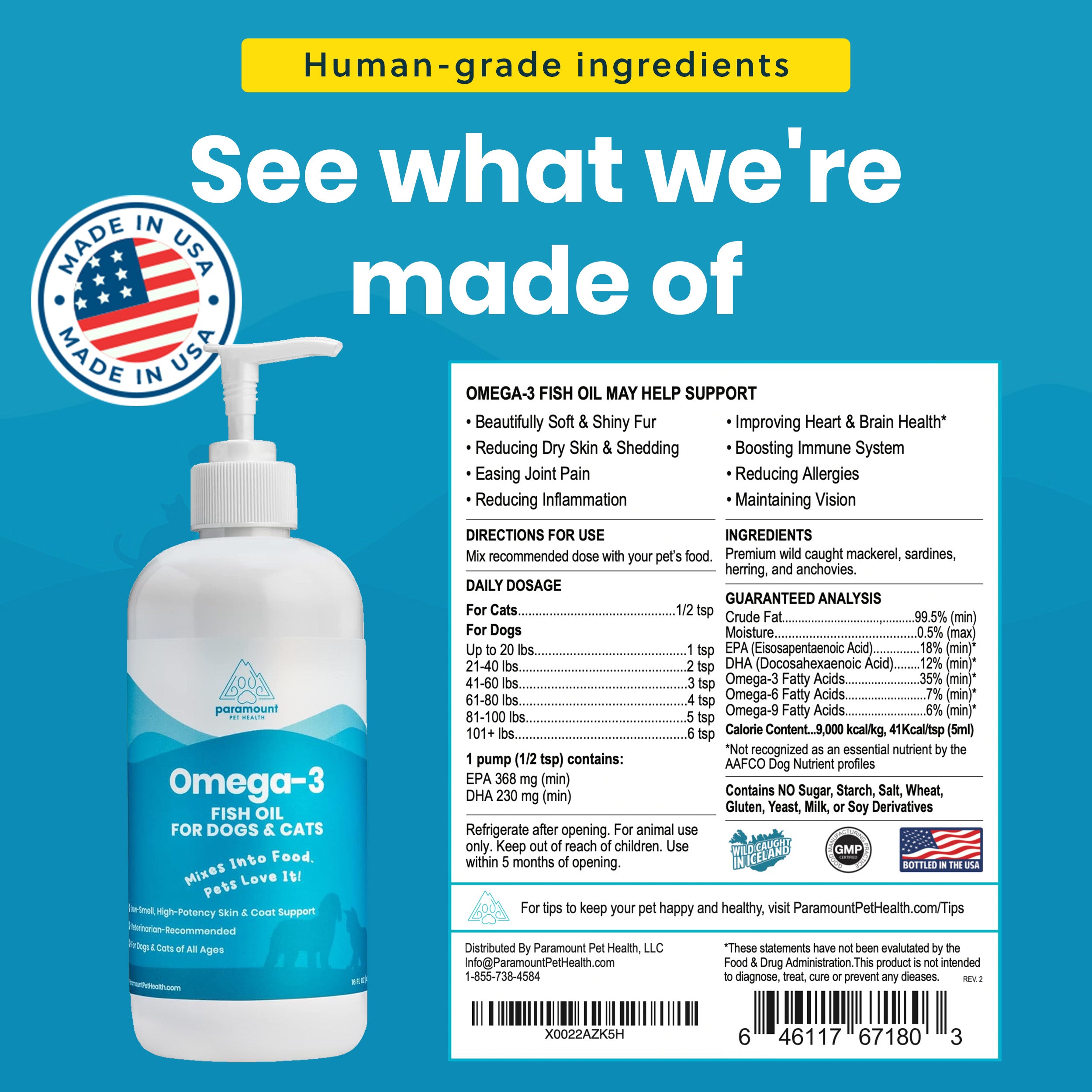
Credit: www.paramountpethealth.com
Frequently Asked Questions
Can Dogs Consume Human Omega-3 Supplements?
Yes, dogs can take human omega-3 supplements, but consult your vet first. Human doses might differ from canine needs. Ensure the supplement is free from harmful additives. Proper dosage is crucial for safety and effectiveness. Always prioritize your dog’s health by seeking professional guidance.
What Are The Benefits Of Omega-3 For Dogs?
Omega-3 supports joint health, reduces inflammation, and enhances coat shine. It also aids cognitive function and heart health. Regular intake can improve overall well-being. These benefits make omega-3 a valuable addition to your dog’s diet. Always consult your vet for personalized advice.
Are There Risks In Giving Dogs Human Omega-3?
Yes, incorrect dosages can cause adverse effects in dogs. Over-supplementation may lead to digestive issues or imbalances. Always use high-quality products and consult a vet. Monitoring your dog’s response is crucial for safety. Adjust dosages as needed under professional guidance.
How Much Omega-3 Should My Dog Have Daily?
Dosage depends on your dog’s weight and health condition. Generally, consult your vet for specific recommendations. They will provide guidelines based on your dog’s needs. Regular assessments ensure optimal benefits and safety. Proper dosage helps in achieving desired health outcomes.
Conclusion
Ensuring your dog gets the right Omega 3 is crucial. Human Omega 3 can be safe, but check doses carefully. Too much can upset their stomach or cause other issues. Always consult your vet for the best advice. They know what’s best for your dog’s health.
Consider Omega 3 designed for dogs as an option. It often fits their needs better. A healthy dog is a happy dog. So make informed decisions for their well-being. Your pet deserves safe, beneficial supplements. Keep their health a priority.

Similar Posts