How Do You Put a Harness on a Dog: Step-by-Step Guide
Senior Canine Nutritionist & Dog Behavior Specialist at Cozy Dog Go Wellness Lab
Are you struggling with putting a harness on your dog? You’re not alone.
Many dog owners find this task a bit tricky and sometimes frustrating. But don’t worry, you’re about to discover some simple steps that will make the process easier and stress-free for both you and your furry friend. Imagine the peace of mind you’ll feel knowing your dog is safely secured for your next adventure together.
With the right guidance, you can turn this challenge into a bonding experience. Keep reading to unlock the secrets of harnessing your dog’s playful energy effectively and enjoy every walk with confidence.
Choosing The Right Harness
Choosing the right harness for your dog is crucial for comfort and safety. A well-fitted harness can prevent injuries and make walks more enjoyable. With various options available, selecting the perfect harness might seem daunting. Understanding different types and factors to consider can help you make an informed decision.
Types Of Dog Harnesses
Dog harnesses come in several styles, each designed for specific needs. The back-clip harnessis popular for everyday walks. It allows easy leash attachment on the dog’s back. Front-clip harnessesare great for training. They help reduce pulling by allowing better control. Dual-clip harnessesoffer versatility with clips both on the back and front. Step-in harnessesare simple to put on. Dogs step into it, and it fastens on the back. Vest harnessesprovide extra comfort, distributing pressure evenly.
Factors To Consider
Several factors should guide your choice of harness. Consider your dog’s size and breed. Larger dogs may need harnesses with sturdy straps. Smaller dogs benefit from lightweight designs. Assess your dog’s behavior. If they pull often, a front-clip harness might work best. Examine the material for durability and comfort. Breathable fabrics are ideal for hot weather. Check adjustability for a snug fit. A well-fitted harness prevents chafing and discomfort. Ensure ease of use. A harness should be easy to put on and take off. Look for harnesses with reflective strips for safety in low-light conditions.

Credit: www.youtube.com
Preparing Your Dog
Ensure the harness is the right size for your dog. Slip the harness over the head, adjusting straps around the chest. Fasten the buckle securely, allowing enough room for comfort.
Preparing your dog for a harness is a crucial step that ensures a smooth and stress-free experience for both you and your furry friend. It’s all about setting the right mood and making your dog feel at ease. This preparation phase is the foundation for a successful harnessing, helping your dog associate it with positive experiences.Calm And Comfort
Creating a calm environment is essential. Your dog can sense your mood, so staying relaxed will encourage them to be calm too. Play soothing music or speak in a gentle voice to set the tone. Comfort is key to a positive experience. Ensure your dog is in a familiar and comfortable space, like their favorite corner or a cozy spot in your living room. A comfortable setting reduces anxiety and makes the harnessing process much smoother.Familiarization With The Harness
Introduce the harness gradually. Let your dog sniff and explore it before attempting to put it on. This helps your dog become familiar with the new object and reduces apprehension. You might even try leaving the harness near their toys or feeding area. This association with routine items can make the harness seem less intimidating. Consider using treats or praise to reward your dog for interacting with the harness. Positive reinforcement encourages your dog to view the harness as something good. Does your dog seem hesitant? Remember, patience is key. Allow them time to get comfortable with the harness at their own pace.Adjusting The Harness
Ensure the harness fits snugly around your dog’s body. Adjust straps for comfort and security. Check that it doesn’t restrict movement or breathing.
Adjusting a harness on your dog is crucial for their comfort and safety. You’ve chosen the right harness, but a great fit will ensure your dog is happy while on their adventures. Let’s dive into making sure the harness fits just right and keeps your furry friend comfortable.Proper Fit
The first step in adjusting the harness is ensuring it fits your dog correctly. A harness should be snug but not tight, allowing you to slide two fingers between the strap and your dog’s body. This prevents any pinching or discomfort while ensuring the harness doesn’t slip off.Checking For Comfort
After adjusting the harness for a proper fit, observe your dog’s reaction. Does your dog seem relaxed or agitated? A comfortable harness won’t cause your dog to itch or scratch, so watch for any signs of irritation. Take your dog for a short walk to see how they move. Are they walking freely or hesitating? You want your dog to feel free and unrestricted, enjoying the world around them without any hindrance from their harness. Remember, every dog is unique, and what works for one might not work for another. If your dog shows discomfort, it might be time to try a different style or size. Your dog’s comfort should always be the priority.Placing The Harness On Your Dog
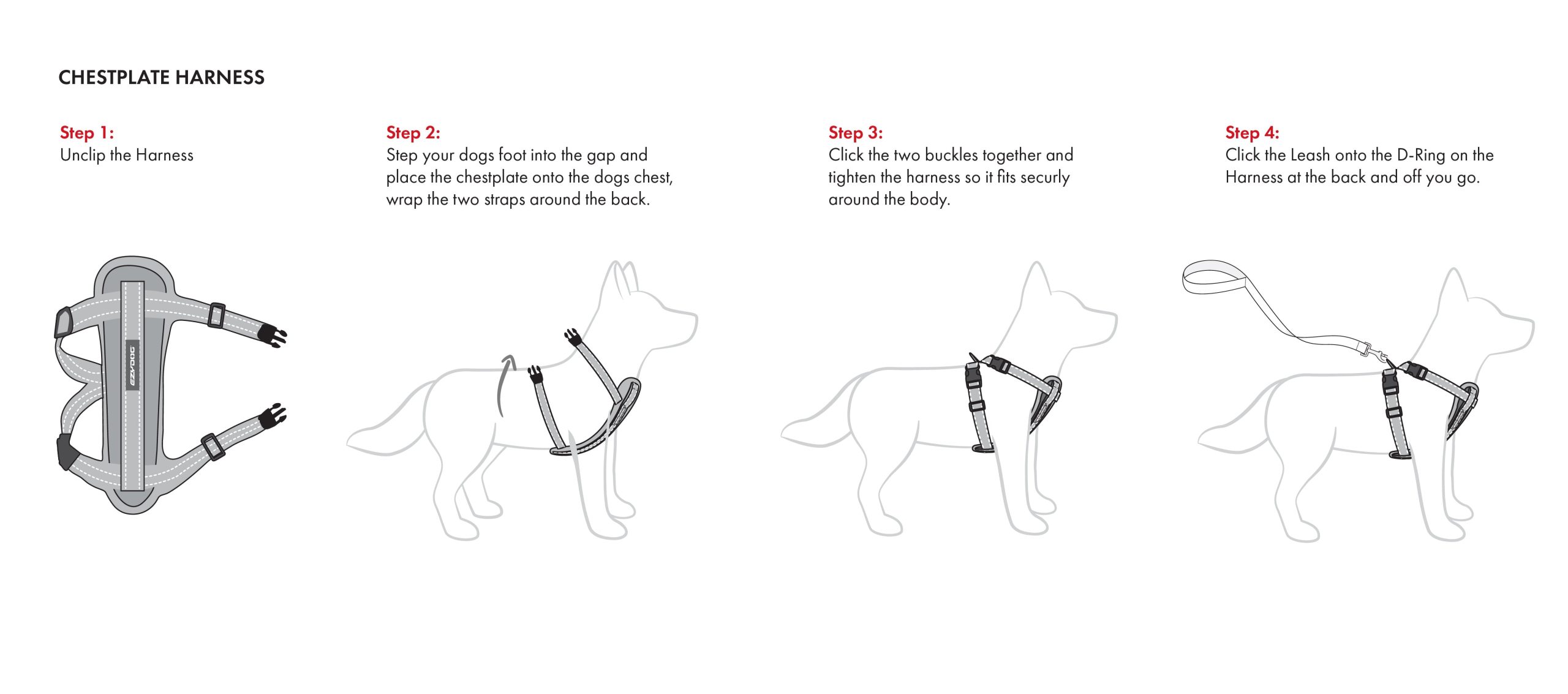
Slide the harness over your dog’s head, ensuring the front strap sits above the chest. Adjust the side straps for a snug fit, then buckle the harness securely under the belly.
Placing the harness on your dog is a simple process. A harness offers better control and comfort during walks. It reduces strain on your dog’s neck. With the right approach, putting on a harness can be easy and stress-free. Follow these steps to ensure a proper fit.Step-by-step Instructions
- Lay the harness flat on the floor.
- Identify the front and back of the harness.
- Guide your dog to step into the harness.
- Pull the straps up over the dog’s back.
- Adjust the straps for a snug fit.
Securing The Harness
- Check the fit around the dog’s chest.
- Ensure the harness isn’t too tight.
- Adjust the straps for comfort and security.
- Make sure the harness doesn’t slide or shift.
- Attach the leash securely to the harness ring.
Checking The Fit
Ensuring the right fit for your dog’s harness is crucial. It ensures both comfort and safety during walks. A well-fitted harness prevents injuries and escape attempts. Let’s explore how to check the fit effectively.
Ensuring Safety
A secure fit minimizes risks during outdoor adventures. Check for any gaps between the harness and your dog’s body. These gaps might let your dog slip out. The harness should be snug but not tight. You should fit two fingers between the harness and your dog’s skin. This ensures enough comfort and freedom of movement.
Adjusting Straps
Properly adjusted straps keep the harness in place. Begin with the neck strap, ensuring it sits above the shoulders. Adjust it so it doesn’t slide down. Then, move on to the chest strap. It should sit flat against your dog’s chest. Avoid placing it too high on the neck or too low on the belly. Use the adjustment buckles to fine-tune the fit. Make sure each strap is even on both sides. This balance prevents discomfort and uneven pressure.

Credit: www.lambwolf.co
Troubleshooting Common Issues
Putting a harness on a dog can be tricky. Start by identifying the front and back of the harness. Slip it over your dog’s head, ensuring straps are not twisted. Secure the buckle around the belly, and adjust straps for a snug fit without being tight.
Putting a harness on a dog can be tricky. Some dogs resist. Others might experience skin irritation. Knowing how to address these issues is important. Let’s explore some common problems and their solutions.Resistance To Wearing
Dogs might resist wearing a harness for various reasons. It might feel strange to them. Use positive reinforcement to ease this resistance. Offer treats and praise when they wear the harness. Let them sniff and explore it first. Gradually increase the time they wear it. Patience is key. Make the experience enjoyable.Skin Irritation
Skin irritation can occur if a harness doesn’t fit right. Check for any redness or chafing on your dog’s skin. Make sure the harness isn’t too tight. There should be room for two fingers between the harness and skin. Choose a harness made of soft, breathable material. Consider using a padded harness for extra comfort. Regularly inspect the harness for wear or damage. Replace it if needed to prevent irritation.Training Your Dog With A Harness
Place the harness on the ground. Encourage your dog to step into the loops. Secure it by fastening the buckles. Adjust the straps for a snug fit, ensuring comfort and mobility.
Training your dog with a harness can be a rewarding experience for both you and your furry friend. A harness not only provides better control but also ensures your dog’s safety and comfort. By investing time in proper training, you can make walks more enjoyable and stress-free. Let’s dive into some essential techniques to help you get started.Leash Training Basics
Begin by introducing the harness to your dog in a calm environment. Allow them to sniff and inspect it. This helps reduce any anxiety associated with wearing something new. Once your dog is comfortable with the harness, gently put it on them and adjust it for a snug fit. Ensure it’s not too tight or too loose. Start with short indoor walks to let your dog get used to the feeling of wearing a harness. Gradually increase the duration as they become more comfortable.Positive Reinforcement Techniques
Reward your dog with treats and praise every time they successfully wear the harness. This creates a positive association with the harness. During walks, offer treats when your dog walks beside you without pulling. This encourages good behavior. Consistency is key. Regularly practice these techniques to reinforce positive habits. Reflect on your dog’s progress. Are they walking more calmly now? Patience and persistence will pay off, leading to happier, more enjoyable walks for both of you.Credit: goobypet.reamaze.com
Frequently Asked Questions
How Do I Choose The Right Dog Harness?
Selecting the right harness involves considering your dog’s size, breed, and behavior. Measure your dog’s chest and neck for accurate sizing. Choose a harness that is comfortable and secure. Look for adjustable straps and durable materials. Always ensure the harness doesn’t restrict movement or cause discomfort.
What Are The Types Of Dog Harnesses?
There are several types of dog harnesses, including back-clip, front-clip, and dual-clip. Back-clip harnesses are great for small dogs and gentle walkers. Front-clip harnesses offer better control for pullers. Dual-clip harnesses provide versatility for different walking situations. Choose according to your dog’s needs and behavior.
How Do I Put On A Step-in Dog Harness?
To put on a step-in harness, lay it on the ground. Have your dog step into the loops with front paws. Pull the harness up and fasten the buckle on your dog’s back. Adjust the straps for a snug, comfortable fit.
Ensure the harness is secure but not too tight.
Why Does My Dog Need A Harness?
Harnesses distribute pressure evenly, reducing strain on your dog’s neck. They offer better control and are ideal for training. Harnesses are also safer for dogs prone to pulling. They prevent choking and are perfect for small breeds with delicate necks.
Choose a harness for your dog’s safety and comfort.
Conclusion
Putting a harness on a dog can be simple. First, choose the right size. A snug fit is key. Make sure it’s not too tight. Or too loose. Practice makes perfect with your dog. Be patient and calm. Offer treats as rewards.
Your dog will feel comfortable soon. A harness can improve walks. It gives you better control. Your dog stays safe and secure. Enjoy your walks together. Happy dog, happy owner.

Similar Posts