
Ever wondered about the mysterious sound of a dog whistle? You might have seen one in a pet store or heard about it from a friend, but what exactly makes a dog whistle special?
Let’s take a closer look at what Khz a dog whistle operates at and why your furry friend can hear it, but you can’t. You’re probably curious about how these seemingly silent tools can grab the attention of dogs so effectively.
It’s all about tapping into the unique hearing abilities of your pet. Imagine having a tool that can communicate with your dog in a way that’s invisible to human ears. Intriguing, right? By understanding the science behind the frequency of a dog whistle, you’ll uncover a new dimension of how dogs perceive sound. Stick around, because learning about this could transform how you train and interact with your dog. Get ready to dive into the fascinating world of sound frequencies and discover what makes a dog whistle tick!
Dog Whistle Basics
Dog whistles typically emit sound frequencies between 16 kHz and 22 kHz. These high frequencies are heard by dogs but not humans. Useful for training and behavior cues, they operate silently to human ears.
Dog whistles are fascinating tools in canine training. They emit sounds at frequencies humans can’t hear. These devices help communicate with dogs over long distances. Understanding the basics of dog whistles can enhance your pet training experience.Purpose And Use
Dog whistles are used to grab a dog’s attention. They operate at a frequency between 23 to 54 kHz. This range is above the human hearing threshold. Trainers use whistles for silent commands. They are effective in controlling and guiding dogs during training. These whistles are also useful in hunting and herding scenarios.History And Evolution
The dog whistle’s origins trace back to the 19th century. Sir Francis Galton invented the first version in 1876. It was known as the Galton’s whistle. Over time, its design has evolved. Modern whistles have adjustable frequencies. This allows customization for specific training needs. Today, they are an essential tool for many dog trainers.Frequency And Pitch
Dog whistles are fascinating tools used to communicate with dogs. Their unique sound is inaudible to humans, but dogs hear them clearly. This is due to the whistle’s frequency and pitch. Understanding these concepts helps explain how dog whistles work.
What Is Frequency?
Frequency measures sound waves. It tells us how often waves pass a point in a second. Measured in hertz (Hz), it ranges widely. Human hearing spans from 20 Hz to 20,000 Hz. Dogs hear higher frequencies, up to 45,000 Hz. Dog whistles operate in this range, making them effective.
Understanding Pitch
Pitch relates closely to frequency. It describes how high or low a sound is. Higher frequencies produce higher pitches. Dog whistles have high pitches, suitable for canine ears. This difference in pitch is why humans don’t hear them. Dogs respond well to these high-pitched sounds. Training is easier with dog whistles.
Frequency Range Of Dog Whistles
Dog whistles are fascinating tools, often used for training and communication with our canine companions. One of the most intriguing aspects of these devices is their frequency range, which lies beyond human hearing capabilities. Understanding the frequency range of dog whistles can help you choose the right one for effective training.
Typical Frequency Range
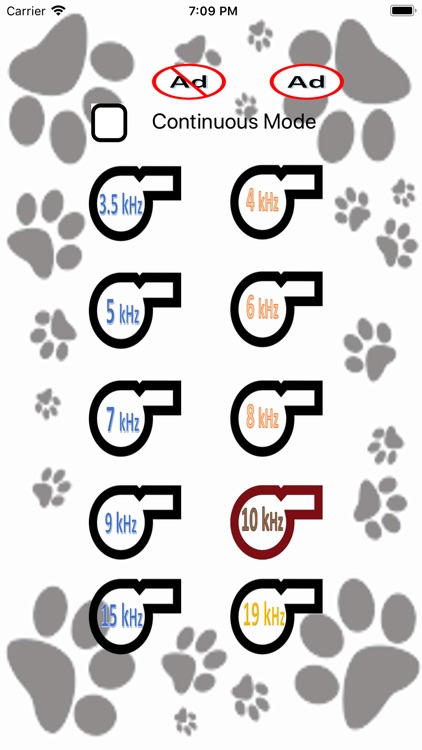
Dog whistles typically operate between 16 kHz and 22 kHz. This range is beyond the upper limit of human hearing, which maxes out around 20 kHz. Dogs, with their acute hearing, can detect these frequencies, making dog whistles perfect for silent commands.
Ever wondered why your dog responds to a whistle, but you hear nothing? This is because dogs can hear frequencies up to 45 kHz, allowing them to pick up sounds that humans cannot.
Factors Affecting Frequency
The frequency of a dog whistle can be influenced by several factors. Material and design play significant roles. Metal whistles might produce different frequencies compared to plastic ones due to their construction.
Your dog’s breed and age also matter. Puppies may respond to different frequencies than older dogs, and some breeds are more sensitive to higher frequencies.
Have you considered experimenting with different whistles to find the one your dog responds to best? This trial-and-error approach can lead to more effective communication and training sessions.
Credit: appadvice.com
Human Vs. Dog Hearing
Dogs hear sounds ranging from 40 Hz to 60 kHz, unlike humans who hear up to 20 kHz. Dog whistles typically range between 16 kHz to 22 kHz, making them inaudible to most human ears but easily detectable by dogs.
The world of sound is a fascinating realm where humans and dogs experience it quite differently. Have you ever wondered why a dog whistle, which is silent to our ears, can make your furry friend perk up immediately? Understanding the differences between human and dog hearing can shed light on this intriguing phenomenon. Let’s dive into the distinct capabilities of both species to comprehend these variations.Human Hearing Limits
Human ears are designed to hear sounds in a specific frequency range. Typically, we can detect sounds from 20 Hz to 20,000 Hz (20 kHz). As we age, the upper limit often decreases, making high-pitched sounds less audible. Imagine attending a concert where the music is vibrant and full of life. However, certain high-pitched notes might not be as clear to someone in their later years. This natural limitation in our hearing range is why you can’t hear a dog whistle.Dog Hearing Capabilities
Dogs, on the other hand, have a remarkable sense of hearing that extends beyond our own. They can hear frequencies ranging from 40 Hz to 60,000 Hz (60 kHz). This means dogs can detect sounds that are not only lower but also much higher than what humans can perceive. Picture your dog suddenly reacting to something you can’t hear. It’s not just their imagination. Their ears are finely tuned to pick up on frequencies you might not even notice. This heightened hearing ability is why a dog whistle, typically between 23 kHz and 54 kHz, is perfectly audible to them but silent to us. Next time your dog reacts to a sound you can’t hear, remember that they live in a world of sound that’s far richer in detail than ours. Isn’t it fascinating how nature equips different species with unique tools to navigate their environments? Understanding these differences can help you communicate better with your four-legged companion.Choosing The Right Dog Whistle
Choosing the right dog whistle isn’t just about picking any whistle off the shelf; it’s about understanding what works best for your dog and your training needs. Different whistles emit sounds at varying frequencies, and choosing the right one can make a significant difference in effectiveness. By considering key factors, testing, and adjusting, you can find a whistle that enhances communication with your furry friend.
Considerations For Selection
When selecting a dog whistle, it’s crucial to think about your dog’s sensitivity to sound. Some dogs respond better to higher frequencies, while others prefer lower ones. Consider your dog’s breed and age, as this can influence their hearing range.
Look for adjustable whistles. These allow you to fine-tune the frequency until you find the perfect pitch that your dog responds to best. Adjustable whistles can be a game-changer in training sessions.
Material and durability should also be on your checklist. If you’re planning outdoor training, a sturdy, weather-resistant whistle is essential. Consider one that’s easy to clean and maintain.
Testing And Adjusting Frequency
Start by testing different frequencies in a quiet environment. Observe your dog’s reaction closely. Does it perk up its ears, or does it seem indifferent? This initial test can provide valuable insights into what works.
Adjusting the frequency is an ongoing process. As your dog becomes accustomed to the whistle, you might need to tweak the frequency for better results. Keep a journal of your observations to track progress.
Be patient and consistent. Frequency adjustment isn’t a one-time task. Regularly test and adjust until you find the sweet spot. Ask yourself, how can you make your dog respond more eagerly to the whistle? This question can guide your adjustments.

Credit: www.ebay.com.au
Uses And Benefits
Dog whistles usually operate at frequencies between 16 to 22 kHz. These high frequencies are inaudible to humans but easily heard by dogs. This makes them useful for training and communication without disturbing people.
Dog whistles, operating at high frequencies often beyond human hearing, are valuable tools in pet training and behavior management. These frequencies, typically ranging from 23 kHz to 54 kHz, serve various purposes for both dog owners and professional trainers. Understanding the uses and benefits of dog whistles can significantly enhance your communication with your canine companion.Training And Communication
Dog whistles offer a unique advantage in training and communication. They emit a consistent sound that your dog can recognize, making commands clearer and more effective. Imagine the relief of having your dog respond promptly in a busy park, where verbal commands might get lost in the noise. Using a dog whistle ensures that your signal reaches your pet without confusion. Whether you’re teaching basic commands like ‘sit’ or complex tricks, the whistle can be an invaluable tool. Consistency is key—pairing specific whistle sounds with commands reinforces learning.Behavioral Benefits
The behavioral benefits of using a dog whistle are compelling. It can help manage unwanted behaviors, such as excessive barking or jumping. By redirecting your dog’s attention with a simple whistle, you can prevent negative behavior before it escalates. Consider the frustration of a dog that won’t stop barking at every passerby. A quick, high-frequency whistle can interrupt this habit without the need for shouting or scolding. This non-verbal cue is less stressful for you and your dog, fostering a calmer household environment. Dog whistles also aid in recall training, ensuring your dog returns to you even when tempted by distractions. Regular practice with a whistle can build a strong recall habit, providing peace of mind during off-leash adventures. Have you tried using a dog whistle in your training routine? It might just be the silent communicator you never knew you needed.Myths And Misconceptions
Dog whistles often emit sounds at frequencies between 20 kHz and 45 kHz, beyond human hearing range. Many believe dogs respond instantly, yet reactions vary widely depending on the individual dog and training.
Myths and misconceptions about dog whistles abound, often leading to misunderstandings about their true functionality and purpose. Many believe they emit sounds only dogs can hear, creating an aura of mystery around their use. But how much of this is true, and how much is just myth? Let’s dive into the common misunderstandings and scientific clarifications to dispel these myths.Common Misunderstandings
A popular misconception is that dog whistles are completely silent to human ears. This isn’t entirely accurate. While some dog whistles can emit sounds beyond the human hearing range, others operate at lower frequencies that you might faintly hear. Another common belief is that all dog whistles have the same effect on every dog. In reality, each dog responds differently based on their breed, age, and training. This means a whistle that works for one dog might not be effective for another. There’s also the myth that dog whistles control dogs like magic. In truth, the effectiveness of a dog whistle largely depends on consistent training and reinforcement. Without proper training, a whistle is just a sound.Scientific Clarifications
Scientifically, dog whistles typically operate between 23 kHz to 54 kHz. Humans generally hear up to 20 kHz, which is why some frequencies are inaudible to us. Dogs, however, can hear frequencies as high as 65 kHz, making these whistles an effective tool for communication. It’s important to understand the science behind how dogs hear. Dogs have more sensitive hearing due to the structure of their ears, which enables them to pick up higher frequencies. This sensitivity allows them to respond to dog whistles more effectively than humans. Have you ever wondered why your dog reacts differently to various sounds? It’s all about the frequency and pitch. Experimenting with different whistle settings can help you find the most effective sound for training your pet. By addressing these myths and clarifications, you gain a clearer understanding of how dog whistles work and how to use them effectively. Are you ready to put this knowledge into practice with your furry friend?
Credit: www.amazon.ca
Frequently Asked Questions
What Frequency Is A Dog Whistle?
A dog whistle typically emits sounds between 16,000 Hz and 22,000 Hz. This frequency is above the range of human hearing but audible to dogs. It is used for training and communication without disturbing humans.
Can Humans Hear Dog Whistles?
Humans usually cannot hear dog whistles because they produce sound above 20,000 Hz. Human hearing ranges from 20 Hz to 20,000 Hz. Dog whistles are designed to be silent to humans but audible to dogs for effective training.
Why Use A Dog Whistle?
Dog whistles are used for training dogs without disturbing humans. The high-frequency sound helps grab a dog’s attention quickly. It is effective for commands and behavioral corrections during training sessions.
How Do Dogs React To Dog Whistles?
Dogs can hear the high-frequency sound of a dog whistle, making them respond quickly. It can capture their attention for commands or recall. Proper training helps dogs associate the whistle sound with specific actions.
Conclusion
Understanding dog whistles helps in training and communication. These whistles operate at high frequencies. Usually between 16 kHz and 22 kHz. Humans can’t hear them well, but dogs can. They respond to these sounds due to their hearing range. Using a dog whistle requires practice and patience.
Consistent training leads to better results. Always ensure your dog feels comfortable. A well-trained dog enjoys learning and listens better. Dog whistles serve as a useful tool in training. Keep exploring and learning more about their benefits. Your dog will appreciate your efforts.


