How to Put the Dog Harness on: Effortless Guide
Senior Canine Nutritionist & Dog Behavior Specialist at Cozy Dog Go Wellness Lab
Have you ever found yourself tangled in confusion while trying to put a harness on your furry friend? You’re not alone.
Many dog owners face this challenge, and it can be frustrating for both you and your pup. A harness is an essential tool that ensures comfort and safety during your walks, but getting it on correctly can sometimes feel like solving a puzzle.
Imagine the relief and confidence you’ll feel knowing you can easily secure your dog’s harness every time. In this guide, we’ll walk you through simple, step-by-step instructions to help you master the art of harnessing your dog effortlessly. By the end, you’ll not only have a happier pet but also a more enjoyable walking experience. Ready to transform your daily walks? Let’s dive in!

Credit: www.youtube.com
Choosing The Right Harness
Choosing the right dog harness is essential for comfort and safety. Ensure the harness fits snugly without pinching. Always check that straps are correctly positioned around the chest and back for a secure fit.
Choosing the right dog harness is crucial for the comfort and safety of your furry friend. A well-fitted harness not only makes walks more enjoyable but also prevents strain on your dog’s neck and back. But how do you know which harness is the right fit for your dog?Types Of Dog Harnesses
Dog harnesses come in various designs, each serving a specific purpose. Back-clip harnesses are great for smaller, well-behaved dogs. They’re easy to put on and help distribute the leash pressure evenly across the body. For those with larger or more energetic dogs, front-clip harnesses can offer better control. This design helps discourage pulling by redirecting your dog’s attention back to you. Step-in harnesses are ideal for dogs that dislike having things pulled over their heads. They’re easy to fit and secure around the chest.Size And Fit Considerations
Choosing the right size is essential. A harness that’s too tight can cause discomfort, while one that’s too loose can lead to escapes. Measure around the widest part of your dog’s chest to ensure a good fit. Check for adjustability. Many harnesses offer adjustable straps to ensure a snug fit, accommodating your dog’s growth or weight changes. Always perform a quick fit check. You should be able to fit two fingers comfortably between the harness and your dog’s body. This ensures the harness is secure without being restrictive. Have you ever tried a harness that just didn’t work out? Share your experiences in the comments!
Credit: www.amazon.com
Preparing Your Dog
Ensure your dog is calm and relaxed. Slip the harness over their head, guiding legs through the loops. Adjust straps for a snug fit.
Putting a harness on a dog can be a challenge. Preparing your furry friend is crucial for a smooth experience. Dogs can be nervous about new things. This section will help you prepare your dog for the harness. It focuses on calming techniques and familiarizing your dog with the harness.Calming Techniques
Dogs sense your mood. Stay calm and positive. Speak in a gentle voice. Offer treats to create a positive atmosphere. Pet your dog gently. This helps them relax. Play soft music to soothe anxious pets. Spend a few minutes calming your dog before starting.Familiarization With The Harness
Introduce the harness slowly. Let your dog sniff it. Hold the harness in your hand. Show it to your dog without putting it on. Reward your dog with treats for staying calm. Do this several times. Make the harness a normal object to your pet. Leave the harness near your dog’s bed or toys. This helps your dog get used to it.Steps To Put On A Harness
Putting on a dog harness can seem tricky at first. Follow these steps for a smooth experience. Ensuring a snug fit keeps your dog safe and comfortable.
Positioning The Harness
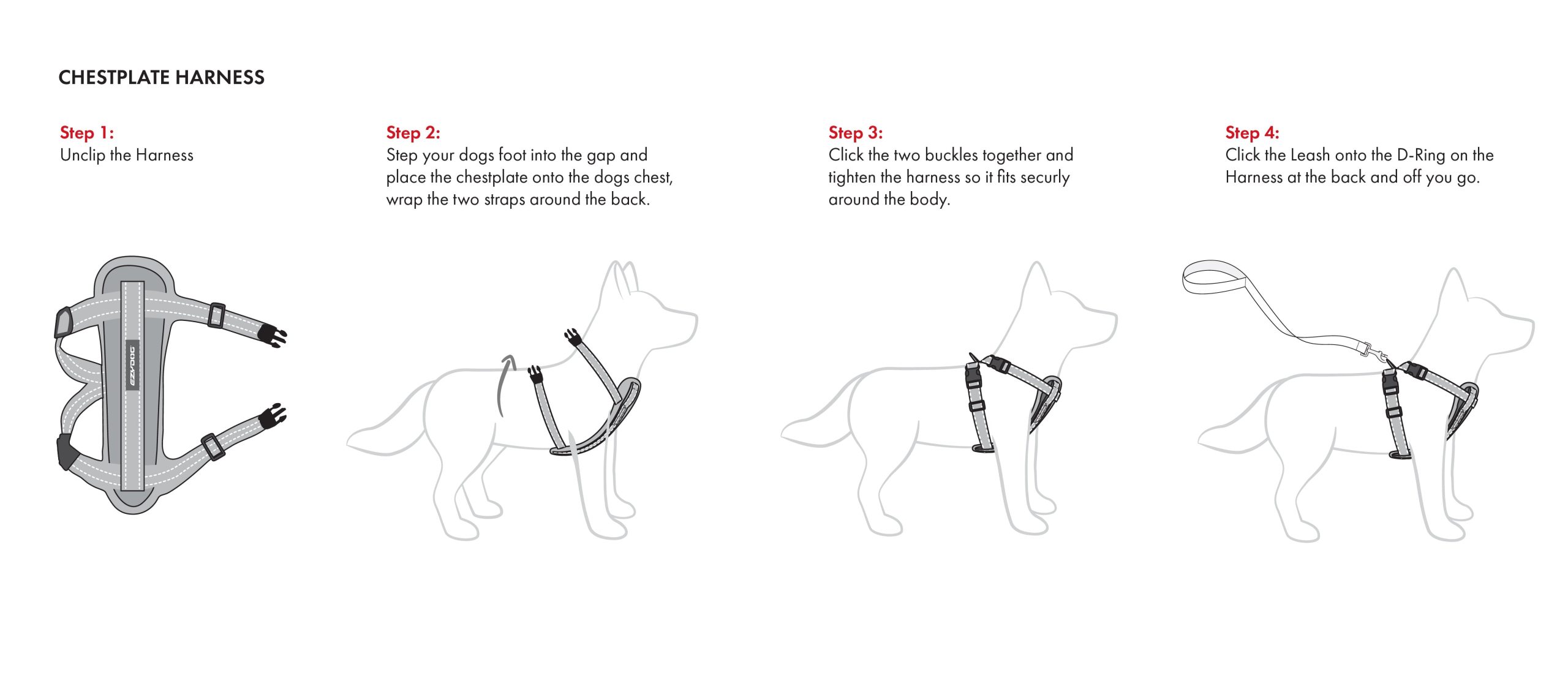
Begin by laying the harness flat on the ground. Your dog should stand calmly near you. Slip the harness over your dog’s head. Make sure the D-ring is on top. The harness should not twist or bunch.
Securing The Straps
Check the straps for any twists. Pull them under your dog’s belly. Fasten each strap securely. Adjust them for a snug fit. You should be able to slip two fingers between the harness and your dog. Make sure the harness is not too tight or too loose.
Ensuring Comfort And Safety
Secure the harness over the dog’s head, making sure the D-ring is on the back. Adjust straps snugly, leaving space for two fingers. Check for comfort and proper fit before each use to ensure safety.
Ensuring Comfort and Safety Putting a dog harness on your furry friend can be a straightforward task, but ensuring their comfort and safety is paramount. A well-fitted harness not only secures your dog but also makes their walks enjoyable. It’s about finding the right balance between snugness and freedom, allowing your dog to move naturally without restrictions. Let’s dive into how you can achieve this.Checking Fit
Begin by examining the harness fit around your dog’s body. You want the harness to be snug but not tight. A good rule of thumb is you should be able to slide two fingers between the harness and your dog’s skin. If you can’t, it’s too tight. If there’s too much room, it might be too loose. Consider the different styles of harnesses. Some wrap around the chest, while others fit like a vest. Choose one that accommodates your dog’s body shape. Remember, a harness that’s too loose can lead to escape, and one that’s too tight can cause discomfort.Adjusting For Movement
Once the harness is on, observe your dog’s movement. They should be able to walk, sit, and run comfortably. Watch for signs of restriction like limping or resistance. If your dog seems uneasy, adjust the straps to enhance mobility. Think about your dog’s routine. Are they active and playful? Ensure the harness allows for a full range of motion during playtime. A harness should work with your dog’s lifestyle, not against it. In what ways can you tell if your dog is truly comfortable? Simple — they should be wagging their tail, exploring, and showing signs of happiness. A comfortable dog is a happy dog, and their harness plays a significant role in this.Common Challenges And Solutions
Ensuring the correct fit of a dog harness can be tricky. Adjust straps to secure a snug yet comfortable fit. Positioning the harness correctly prevents discomfort and ensures safety during walks.
Putting a dog harness on your furry friend might seem like a straightforward task, but many pet owners encounter common challenges that can turn this simple activity into a frustrating ordeal. Understanding these challenges and learning effective solutions can make the process smoother for both you and your dog. Whether you’re dealing with a resistant pup or facing tangling issues, there are practical strategies to ensure a pleasant experience.Dealing With Resistance
If your dog resists wearing a harness, it might be due to discomfort or unfamiliarity. Start by allowing your dog to sniff and investigate the harness. Reward them with treats each time they show interest. Gradually, associate the harness with positive experiences, like walks or playtime. Another approach is to ensure the harness fits well. A poorly fitting harness can be uncomfortable, leading to resistance. Adjust the straps so it’s snug but not tight. A simple rule of thumb is to ensure you can fit two fingers between the harness and your dog’s body. Patience is key. If your dog continues to resist, pause and try again later. Forcing the harness can lead to anxiety, making future attempts even harder. Instead, show calmness and encouragement.Avoiding Tangling
Tangling can be a common nuisance, especially with dogs who are eager and energetic. To prevent tangling, it’s crucial to lay the harness flat before putting it on your dog. This preemptive step helps avoid twisted straps that can confuse both you and your pet. Start by identifying the front and back of the harness. This might seem obvious, but in the heat of the moment, it’s easy to get mixed up. Once you have the right orientation, gently guide your dog to step into the harness, securing one paw at a time. For dogs that are particularly active, consider using a harness with fewer straps or a simpler design. These are often easier to manage and reduce the chance of tangling. Have you ever wondered why some dogs seem to enjoy wearing their harness while others don’t? Understanding your dog’s preferences can make all the difference.Training Tips
Training your dog to wear a harness is more than just a one-time task; it’s an ongoing process that builds trust and strengthens your bond. As you embark on this journey, patience and consistency are key. Let’s delve into some effective training tips that will make the experience enjoyable for both you and your furry friend.
Positive Reinforcement
Positive reinforcement is a powerful tool in dog training. Reward your dog every time they allow you to put on the harness without fuss. This could be a treat, a toy, or even verbal praise—whatever your dog responds to best.
Think of it as celebrating small victories. Your dog will soon associate the harness with positive experiences, making them more receptive to wearing it.
Have you noticed how dogs light up when they hear your cheerful voice? Use that same enthusiasm when they cooperate during harness training.
Consistent Practice
Consistency is crucial when training your dog. Set aside time each day to practice putting on the harness. The more regular this becomes, the more natural it will feel for your dog.
Consistency builds familiarity, and dogs thrive on routine. Consider making harness practice part of your daily walk preparation. This keeps it relevant and practical.
Are you committed to building a routine that works for both you and your dog? A little daily effort goes a long way in achieving harmony.
When To Seek Professional Help
Difficulty putting on a dog harness? Seek professional help if your pet shows signs of distress or discomfort. A trained professional can ensure the correct fit, preventing injury and ensuring your dog’s safety.
Putting a dog harness on can seem simple. Yet, there are times when professional help becomes necessary. Some situations call for expert guidance to ensure your dog’s safety and comfort. Understanding these situations can make life easier for both you and your pet.Behavioral Issues
Dogs may resist wearing a harness due to fear. Some dogs feel anxious or uncomfortable. Professional trainers can help address these issues. They use techniques to calm and reassure your dog. This makes harnessing less stressful. Trainers also teach you how to handle these behaviors. It’s important to address fears early.Special Needs Dogs
Dogs with special needs may require unique harnesses. Health conditions or physical limitations can complicate fitting a standard harness. A professional can assess your dog’s specific needs. They recommend the best type of harness. This ensures your dog’s comfort and safety. If your dog has mobility issues, a vet or specialist can provide advice. This ensures your dog remains active and happy.
Credit: edog.co.nz
Frequently Asked Questions
How Do I Choose The Right Dog Harness?
Selecting the right dog harness involves considering your dog’s size, breed, and activity level. Ensure the harness is adjustable for comfort. Opt for a harness that distributes pressure evenly to prevent injury. Check for durable materials and secure fastenings. A proper fit allows two fingers to slide under the harness.
What Are The Steps To Put On A Dog Harness?
First, identify the front and back of the harness. Slide the harness over your dog’s head and adjust it. Secure the buckles around the chest and back. Ensure the harness is snug but not too tight. Finally, check that the harness does not restrict movement.
Why Is A Harness Better Than A Collar?
Harnesses distribute pressure across the chest, reducing strain on the neck. This makes them safer for dogs prone to pulling. They provide better control, especially for larger or stronger dogs. Harnesses also prevent choking and are ideal for puppies or dogs with respiratory issues.
They offer more comfort during walks.
Can A Harness Be Worn All Day?
It’s not advisable for a dog to wear a harness all day. Continuous wear can cause discomfort or skin irritation. Remove the harness during rest or playtime at home. Ensure regular breaks to check for signs of chafing or pressure.
Use the harness primarily for walks or outdoor activities.
Conclusion
Putting on a dog harness might seem tricky at first. But with practice, it becomes easy and quick. Always check the fit to ensure comfort and safety. Adjust straps to suit your dog’s size. Avoid making it too tight or too loose.
A proper fit prevents escapes and accidents. Every dog is unique, so take your time during fitting. With patience, you and your dog will enjoy safe, pleasant walks. Remember, a well-fitted harness keeps your dog happy and secure. So, gear up and enjoy the strolls together!

Similar Posts