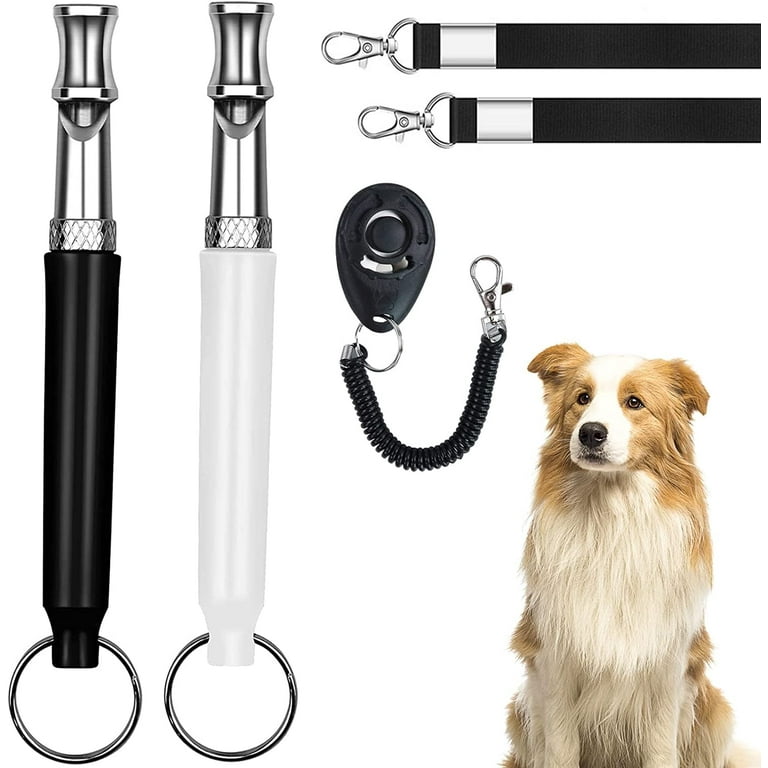
Do Dog Whistles Work to Stop Barking: Myth or Miracle?
Senior Canine Nutritionist & Dog Behavior Specialist at Cozy Dog Go Wellness Lab

Do you often find yourself frustrated by your dog’s constant barking? You’re not alone.
Many dog owners struggle with this common issue. Barking can disrupt your peace, your neighbors, and even your sleep. But what if there was a simple tool that could help? Enter the dog whistle—a tiny device that promises to quiet your furry friend with just a gentle blow.
But does it really work? Can a dog whistle stop your dog from barking, or is it just another gimmick? Before you spend your money, it’s important to know the facts. In this blog post, we’ll dive into the science and effectiveness of dog whistles. By the end, you’ll have a clearer understanding of whether this tool is the right solution for you and your loyal companion. Stay with us, and let’s uncover the truth behind the silent power of dog whistles.
Dog Whistles: History And Use
Dog whistles have a long history in training. They emit a high-pitched sound that dogs hear. Many believe they help in stopping excessive barking by catching a dog’s attention without disturbing humans.
Dog whistles have a fascinating history that extends beyond the boundaries of simple animal training tools. Originally developed in the 19th century, these high-frequency devices were designed to assist hunters by communicating with their dogs over long distances. But do they really work to stop barking, or is it all just a myth?Understanding The Origins Of Dog Whistles
Dog whistles were first invented by Sir Francis Galton in 1876. Known as the “Galton’s Whistle,” it was initially a scientific tool for testing the upper limits of human hearing. Over time, it found a practical application in animal training due to its ability to produce sounds inaudible to humans but perceptible to dogs.How Dog Whistles Became Popular
Hunters and dog trainers quickly embraced the dog whistle for its efficiency. Unlike verbal commands that could startle or confuse a dog, the whistle provided a consistent sound. It allowed trainers to maintain control without shouting or using physical cues, making it particularly effective during hunts or in crowded environments.The Mechanics Behind The Whistle
Dog whistles operate at frequencies between 23 to 54 kHz, which are beyond the range of human hearing. Dogs, however, can hear these high-pitched sounds clearly. This unique feature makes the dog whistle an ideal tool for discreet communication and command reinforcement.Modern-day Uses And Effectiveness
Today, dog whistles are used for more than just hunting. They are popular among pet owners trying to manage excessive barking. The high-pitched sound can interrupt barking patterns, prompting dogs to stop and listen. However, effectiveness can vary. Some dogs respond immediately, while others may require consistent training to associate the whistle with a desired behavior.Personal Experiences And Tips
Many dog owners, myself included, have found dog whistles to be a helpful tool. When my dog Max started barking at every passerby, the whistle helped redirect his attention. Before you start using a dog whistle, consider your dog’s personality and training needs. Will a high-frequency sound capture their attention, or will it require additional training to achieve the desired results? Incorporating a dog whistle into your training routine might just be the solution to your barking woes. But remember, patience and consistency are key.How Dog Whistles Work
Dog whistles emit a sound only dogs hear. They can help stop barking by catching the dog’s attention. Consistent training with a whistle can reduce unwanted barking over time.
Understanding how dog whistles work can be fascinating. These small tools can be quite effective in managing your dog’s behavior, like excessive barking. But why do they work, and what makes them different from ordinary whistles?Frequency And Sound
Dog whistles produce a sound at a frequency higher than what humans can hear. This sound range typically falls between 16,000 and 22,000 hertz. While it’s inaudible to us, dogs pick up on it clearly. Imagine a tool that can signal your dog without disturbing anyone around you. That’s the magic of these frequencies. Since every dog is different, you might need to adjust the frequency to find the one that best captures your dog’s attention.Dog Hearing Abilities
Dogs have remarkable hearing capabilities compared to humans. They can hear sounds at a much higher frequency, which is why a dog whistle is effective. Their hearing range extends up to 45,000 hertz, depending on the breed. Think about how your dog reacts to a distant sound that you can’t hear. This acute sense of hearing allows dogs to respond to the whistle’s sound. When used correctly, it can be a non-intrusive way to train or command your pet. Have you ever noticed your dog react to a sound you didn’t even notice? That’s the power of their hearing abilities. Using a dog whistle taps into this natural skill, helping you communicate with your furry friend more effectively.Training With Dog Whistles
Dog whistles can be useful tools for training. They produce sounds at frequencies humans can’t hear, but dogs can. This makes them ideal for communicating without disturbing others. Proper training with dog whistles requires patience and technique. Let’s explore effective methods to use dog whistles for stopping barking.
Effective Training Techniques
Start by associating the whistle sound with commands. Pair the whistle with commands your dog already knows. For example, use the whistle for “quiet” or “sit.” This reinforces the sound as a cue. Gradually, introduce the whistle during times when your dog barks. Reward silence with treats or praise. Over time, your dog will learn to associate the whistle with stopping barking.
Consistency And Timing
Consistency is key in whistle training. Use the same whistle sound each time. This helps your dog recognize the cue. Timing is also important. Blow the whistle immediately when barking starts. This helps your dog connect the action with the sound. Practice regularly to reinforce learning. Consistent training leads to better results.
Common Myths About Dog Whistles
Dog whistles are often seen as a solution for barking problems. Many people believe myths about their effectiveness. Let’s explore two common myths.
Instant Silence Myth
Some think dog whistles can instantly quiet barking dogs. This is not true. Dogs need training to respond to whistles. Whistles alone can’t stop barking immediately. They are tools, not magic. Consistent training is necessary for results.
Universal Solution Myth
People often assume dog whistles work for all dogs. Each dog is unique. Some may not react to whistles. Others might be scared or confused. Understanding your dog’s behavior is important. Whistles are not a one-size-fits-all solution.
Scientific Studies On Dog Whistles
Have you ever wondered if dog whistles truly work to stop barking? While they’re a popular tool among pet owners, the science behind their effectiveness is crucial to understand. This section explores the fascinating world of scientific studies on dog whistles, shedding light on their impact on canine behavior.
Research Findings
Scientific research on dog whistles is surprisingly limited, yet insightful. A study conducted by the University of Lincoln found that high-frequency sounds can capture a dog’s attention. However, the response varies significantly based on the dog’s breed and hearing ability.
Another research from the Journal of Veterinary Science highlights that while some dogs may reduce barking when exposed to a dog whistle, others might not be affected at all. This discrepancy often leaves pet owners puzzled, questioning the reliability of this tool.
Interestingly, the study also pointed out that younger dogs tend to have a more pronounced reaction to dog whistles compared to older dogs. It suggests that age and auditory capacity play a significant role in the whistle’s effectiveness.
Expert Opinions
Dog trainers and behaviorists hold diverse views on the use of dog whistles. Renowned dog trainer, Cesar Millan, suggests that while dog whistles can be useful, they should be part of a broader training approach. He emphasizes understanding your dog’s unique behavior and adapting accordingly.
Dr. Emily Blackwell, an animal behavior expert, warns that relying solely on dog whistles could lead to inconsistent results. She recommends combining whistles with positive reinforcement techniques for more sustainable behavior modification.
Experts also agree that the context in which a dog whistle is used matters significantly. For instance, using it in a calm environment might be more effective than in a noisy setting. Have you considered how your environment might be influencing your dog’s response to a whistle?
Incorporating these insights into your approach can lead to better outcomes. Are you ready to test the waters and see how your furry friend responds?

Credit: www.amazon.ca
Alternative Solutions For Barking
Dog whistles often promise a quick fix for barking. Yet, they don’t always work for every dog. Exploring alternative solutions can be helpful. By understanding different methods, you can find what suits your dog’s needs best.
Behavioral Training
Training your dog can reduce excessive barking effectively. It involves teaching commands like “quiet” or “stop.” Reward your dog when it follows the command. Consistent practice makes a big difference. Patience is key in this training process.
Environment Adjustments
Your dog’s environment can impact its barking behavior. Ensure your dog has enough toys to stay engaged. A bored dog may bark more. Check if external noises trigger barking. Soundproofing might help reduce these disturbances. Creating a peaceful environment can lead to a quieter dog.
Real-life Experiences
Dog whistles can be effective in managing barking. They emit a high-pitched sound that humans can’t hear. Dogs respond to these sounds, which can interrupt their barking.
Real-Life Experiences Dog owners worldwide often turn to dog whistles as a potential solution for curbing excessive barking. While some swear by their effectiveness, others have encountered challenges. Let’s delve into real-life stories that showcase both sides of the coin.Success Stories
Many dog owners have found dog whistles to be a simple yet effective tool in controlling barking. Jenny, a devoted pet owner from Austin, discovered that her dog responded positively to the whistle after just a few days. The high-pitched sound, inaudible to humans, seemed to grab her dog’s attention immediately. This allowed her to interrupt the barking and redirect her pet’s focus to a more desirable behavior. Jenny’s success was rooted in consistency and patience. Another enthusiast, Mark, shared how dog whistles helped him manage his dog’s barking during walks. The whistle acted as a gentle reminder for his furry friend to stay calm. Have you tried using a whistle on your walks?Challenges Faced
However, not every story is a success story. Some owners face hurdles when using dog whistles. Emma, from San Francisco, noted that her dog seemed indifferent to the whistle. Despite following instructions carefully, she saw minimal change in behavior. This raised questions about individual dog sensitivities. Could it be that some dogs simply don’t react to whistles? Emma’s experience suggests that some dogs may require alternative methods or additional training for effective results. Additionally, David from New York highlighted the difficulty in using the whistle in outdoor settings. His dog would often get distracted by other stimuli, rendering the whistle ineffective. This points to the importance of understanding your dog’s unique environment and triggers.
Credit: www.amazon.ca
Choosing The Right Approach
Dog whistles can be a useful tool to curb excessive barking by capturing a dog’s attention. High-pitched sounds may distract and redirect focus, providing a temporary solution for barking issues.
Choosing the right approach to stop your dog’s barking is crucial. Each dog is unique with different triggers and behaviors. Understanding these can help in selecting the most effective method. Some methods may work better for certain dogs than others. Tailoring your approach can lead to more successful outcomes.Assessing Your Dog’s Needs
First, observe your dog’s behavior and environment. Does barking occur at specific times? Identify triggers like strangers, noises, or boredom. Each trigger requires a unique solution. Understanding your dog’s needs helps in choosing suitable techniques.Combining Techniques
Using a combination of methods can be effective. Pair dog whistles with other training tools. Consider rewards for good behavior and consistent commands. Combining techniques enhances learning and reduces excessive barking. Consistency is key.
Credit: www.amazon.ca
Frequently Asked Questions
How Do Dog Whistles Stop Barking?
Dog whistles emit a high-frequency sound that only dogs can hear. This sound distracts dogs, interrupting their barking. Over time, they may associate the whistle with stopping unwanted behavior. Consistent training and positive reinforcement enhance effectiveness. However, not all dogs may respond similarly to dog whistles.
Are Dog Whistles Safe For Dogs?
Yes, dog whistles are generally safe when used correctly. They produce a high-frequency sound, inaudible to humans but harmless to dogs. Ensure the whistle’s frequency is not too loud. Excessive or incorrect use can cause stress or anxiety in dogs.
Always observe your dog’s reaction and adjust accordingly.
Can All Dogs Hear Dog Whistles?
Most dogs can hear dog whistles due to their sensitive hearing range. However, some dogs, particularly older ones, may have hearing impairments. This can affect their response to whistles. It’s important to test the whistle and observe your dog’s reaction.
Adjust usage based on their individual sensitivity and hearing ability.
Do Dog Whistles Work On All Breeds?
Dog whistles can work on most breeds, but effectiveness varies. Some breeds respond better due to their sensitivity to high frequencies. Others may require additional training and reinforcement. It’s important to understand your dog’s behavior and adapt training methods accordingly.
Consistency and patience are key to successful outcomes.
Conclusion
Dog whistles can be useful tools to stop barking. They offer a gentle way to manage noisy situations. Not every dog responds the same, though. Some might ignore the sound. Others might react well. It’s essential to understand your dog’s behavior first.
Experimenting with different techniques helps find what works best. Patience and consistency are key. Training takes time. Combine whistles with other methods for effective results. Consider professional advice if needed. A peaceful home is possible with the right approach. Your dog’s well-being matters most.

Similar Posts