Do you often find yourself struggling to manage your dog’s unexpected reactions? You’re not alone.
Reactive behavior in dogs can turn a simple walk into a challenging ordeal, leaving you feeling frustrated and helpless. But what if you could turn this around? Imagine the relief of walking your dog with confidence, knowing they’ll stay calm even in the most distracting environments.
This isn’t just wishful thinking; it’s entirely possible with the right training techniques. In this guide, you’ll discover effective methods to train your reactive dog, empowering you to transform chaos into calm. Get ready to unlock the secrets to a happier and more harmonious life with your furry friend. Dive in and learn how you can make a real difference in your dog’s behavior today!

Credit: pupford.com
Identifying Reactivity In Dogs
Training reactive dogs involves understanding their triggers and building positive experiences. Consistent training helps reduce stress and improve behavior. Patience and rewards make a significant difference in their progress.
Identifying reactivity in dogs is crucial for effective training. Reactive dogs often show intense responses to certain stimuli. These reactions can stem from fear, excitement, or frustration. Understanding reactivity helps in managing and reducing it. Recognizing signs early can make training easier.Common Signs Of Reactivity
Reactive dogs display specific behaviors. Barking excessively is a common sign. Growling or lunging at people or other dogs is another. Some dogs may even try to escape. Tail position can indicate stress or alertness. Ears pinned back often signal discomfort. Watch for these cues during walks or new situations.Understanding Triggers
Triggers are stimuli that provoke reactions. They vary from dog to dog. Some dogs react to other animals. Others may react to loud noises. Unfamiliar people can also trigger responses. It’s important to note what sets your dog off. Observing your dog in different environments helps. Keep a diary of reactions and their causes. This helps tailor training to specific needs.
Credit: www.facebook.com
Causes Of Dog Reactivity
Reactive behavior in dogs often stems from fear, frustration, or lack of socialization. Identifying the root cause is crucial for effective training. Consistent positive reinforcement helps build confidence and reduce reactivity.
Understanding why dogs become reactive is key to addressing their behavior effectively. Reactivity in dogs can stem from various causes, each influencing how they perceive and respond to the world around them. By examining these causes, you can tailor your approach to training and help your furry friend become more confident and calm.Genetic Factors
Some dogs are predisposed to reactivity due to their genetic makeup. Breeds known for high alertness or guarding instincts might naturally exhibit heightened responses. This doesn’t mean all dogs of these breeds will be reactive, but it can be a contributing factor. Consider the traits commonly seen in your dog’s breed and observe if these align with their behavior. A personal story can be enlightening here: my own German Shepherd, Max, showed signs of reactivity early on. Understanding his breed’s tendency for protectiveness helped me approach his training with patience and empathy.Environmental Influences
The environment a dog grows up in plays a significant role in shaping its behavior. Dogs raised in chaotic or unpredictable settings may develop reactive tendencies as a survival mechanism. Conversely, dogs exposed to diverse experiences in a calm environment are often more adaptable. Think about the places your dog frequents and the stimuli they encounter regularly. If your dog tends to react more in certain situations, ask yourself what environmental factors might be at play. This insight can lead to practical adjustments in their routine, potentially reducing reactivity. Have you noticed how your dog behaves differently when visiting new places versus familiar ones? This observation can be crucial in addressing reactivity by gradually increasing their exposure to new environments in a controlled manner.Behavioral Training Techniques
Training reactive dogs involves understanding their triggers and using positive reinforcement. Start with controlled environments to manage their responses. Gradually increase distractions while rewarding calm behavior. Consistency and patience help build confidence and trust in your dog.
Behavioral training techniques play a crucial role in helping reactive dogs. These techniques focus on teaching dogs to respond calmly to various stimuli. By using structured methods, owners can guide their dogs towards positive behavior changes. Let’s explore some effective techniques to train reactive dogs.Positive Reinforcement
Positive reinforcement is a powerful tool in dog training. It involves rewarding dogs for good behavior, encouraging them to repeat it. Use treats, praise, or toys when your dog behaves calmly. This helps build a connection between calm behavior and rewards. Consistency is key. Repeat this process often to reinforce the desired behavior. Dogs learn best in a positive environment. Keep training sessions short and engaging. This prevents boredom and keeps your dog interested.Desensitization Strategies
Desensitization helps dogs become less reactive to triggers. Start by exposing your dog to a mild version of the trigger. Gradually increase the intensity over time. This helps them adjust without feeling overwhelmed. Use a calm voice to reassure your dog during exposure. Pairing exposure with positive reinforcement aids the process. Introduce triggers at a distance first. Slowly decrease the distance as your dog becomes comfortable. Remember, patience is vital. Progress might be slow, but it’s essential for lasting change.Tools And Equipment
Leashes and harnesses offer control and safety for reactive dogs during training sessions. Clickers and treats help reinforce positive behaviors and encourage learning. Comfortable muzzles can prevent accidents and ensure safety in challenging situations.
Training reactive dogs can be challenging. Using the right tools and equipment makes it easier. The right gear helps manage your dog’s behavior safely and effectively. It’s essential to choose tools that suit your dog’s specific needs.Choosing The Right Leash
A sturdy leash is vital. It gives you control during walks. Opt for a leash with a comfortable grip. This ensures you can handle your dog without strain. A leash should be long enough for freedom, but short enough for control. Consider a 4 to 6-foot leash for balance. Avoid retractable leashes. They offer less control and can increase reactivity.Using Muzzles Safely
Muzzles can prevent bites during stressful situations. Choose a muzzle that allows panting and drinking. This ensures your dog’s comfort and safety. Introduce the muzzle gradually. Let your dog sniff and explore it first. Use treats to create a positive association. Never use a muzzle as punishment. It should be a tool for safety, not fear.Consistency And Patience
Training reactive dogs requires consistency and patience. Repeated positive reinforcements build trust and reduce anxiety over time. Staying calm and rewarding small successes encourages positive behavior.
Consistency and patience are key in training reactive dogs. These animals need a stable environment to learn and grow. Training involves a lot of repetition and time. The process demands dedication from the owner. It can be challenging, but the rewards are worth it. Both the dog and the owner can build a strong bond. This bond is based on trust and understanding.Setting Realistic Goals
Set achievable goals for your dog’s training. Start with simple commands. Gradually increase the difficulty. Understand your dog’s limits. Avoid overwhelming them with too much at once. Celebrate small victories. Every step forward is progress. Realistic goals keep motivation high.Maintaining Progress
Track your dog’s progress regularly. Keep a journal of their achievements. Adjust training methods if needed. Stay consistent with routines. Practice commands daily. Reinforce learned behaviors. Use positive reinforcement. Praise and rewards work wonders. Keep training sessions short and focused. A happy dog learns better.Professional Help
Training a reactive dog can be a challenging task, but sometimes, seeking professional help can make all the difference. Professional trainers bring a wealth of experience and knowledge that can be crucial in understanding your dog’s unique behavior patterns. Their tailored approaches can help your furry friend learn to cope with triggers in a healthy way. But how do you know when it’s time to seek out a trainer? And what are the benefits of group classes?
When To Seek A Trainer
Recognizing when to bring in a professional is key. If your dog’s reactivity is escalating despite your efforts, it might be time to consult a trainer. A trainer can help identify specific triggers and provide strategies to manage them effectively. Have you ever felt overwhelmed by your dog’s unpredictable reactions during walks? That’s a clear sign you might need expert guidance.
Trainers can also assist in cases where your dog’s behavior becomes a safety concern. If you notice aggression towards other dogs or people, professional intervention can prevent potential incidents. Imagine walking peacefully with your dog, confident that they can handle unexpected situations calmly—trainers can help make this a reality.
Benefits Of Group Classes
Group classes offer unique advantages for reactive dogs. They create a controlled environment where your dog can practice social interactions with others under the supervision of a trainer. These classes foster a sense of community, allowing you to connect with other dog owners facing similar challenges.
One major benefit is the exposure to different dogs and scenarios, which can help desensitize your dog to various stimuli. By observing other dogs, your pet learns that new encounters don’t always lead to negative outcomes. Have you ever wondered how your dog would react in a park full of playful pups? Group classes can be a stepping stone towards achieving that calm demeanor.
Furthermore, group classes often incorporate fun activities that make learning enjoyable for your dog. This positive association can boost your dog’s confidence and willingness to adapt. Imagine the joy of watching your once-reactive dog happily engage in group activities, demonstrating newfound confidence.
Managing Public Situations
Training reactive dogs in public settings involves patience and consistency. Use positive reinforcement to encourage calm behavior. Gradual exposure to various environments helps build confidence and reduce anxiety.
Managing public situations with a reactive dog requires patience and strategy. These dogs may react strongly to unfamiliar stimuli, creating challenges in public areas. Understanding how to handle these situations can make outings smoother. Consistent training and clear commands help maintain control and confidence.Handling Encounters With Other Dogs
Meeting other dogs can be stressful for reactive pets. Keep a safe distance during encounters. Use treats to distract and reward your dog for calm behavior. Practice commands like “sit” or “stay” to maintain focus. Gradually decrease distance as your dog becomes more comfortable. Always monitor your dog’s body language.Navigating Busy Environments
Busy streets and parks can overwhelm reactive dogs. Start in quieter areas and slowly introduce more noise and movement. Use positive reinforcement to build confidence. Short training sessions prevent overstimulation. Keep a close eye on your dog’s reactions. Offer breaks in calm spaces if needed.Lifestyle Adjustments
Training reactive dogs requires patience and consistent practice. Start by identifying triggers and gradually introduce controlled exposure. Positive reinforcement and calm environments help in building trust and reducing anxiety.
Training a reactive dog requires more than just obedience lessons; it demands thoughtful lifestyle adjustments. These changes can create a harmonious environment for you and your furry friend. Embracing these modifications can significantly ease your dog’s reactivity and foster a calmer demeanor.Creating A Safe Home Environment
A safe home environment is the foundation of managing a reactive dog. Start by identifying triggers within your living space. It could be the doorbell, certain noises, or even particular visitors. Consider setting up a quiet zone for your dog. This could be a cozy corner or a specific room where they feel secure. Fill this space with comforting items like their favorite blanket or toys. Additionally, use baby gates or barriers to manage your dog’s access to certain areas. This will help control their exposure to stressful situations. How does your dog respond when the environment feels controlled and safe?Incorporating Mental Stimulation
Mental stimulation is as crucial as physical exercise for reactive dogs. Engage your dog with puzzle toys or treat-dispensing gadgets that challenge their problem-solving skills. These activities can help divert their attention from anxiety-inducing stimuli. Rotate toys and games to keep things fresh and exciting. A simple game of hide and seek with treats can be both stimulating and rewarding for your dog. Interactive play sessions can also strengthen your bond and provide an outlet for their energy. Are you ready to explore new ways to captivate your dog’s mind? By making these lifestyle adjustments, you can pave the way for a more peaceful coexistence with your reactive dog. Remember, patience and consistency are key. What lifestyle changes will you implement first?Monitoring Progress
Tracking your dog’s progress is crucial in training reactive dogs. Observe changes in behavior to adjust techniques effectively. Document improvements to maintain motivation and refine training methods.
Monitoring progress when training reactive dogs is crucial for ensuring that your efforts are making a difference. It’s essential to keep track of changes and celebrate successes along the way. This helps to keep motivation high and provides a clear roadmap of what works and what needs adjustment.Tracking Behavioral Changes
Keep a journal to document day-to-day observations. This can include specific triggers, intensity of reactions, and duration of incidents. Consider creating a simple table:| Date | Trigger | Reaction | Notes |
|---|---|---|---|
| 01/01/2023 | Doorbell | Barking | Less intense than last week |
Celebrating Milestones
Every small victory counts. Did your dog remain calm when a stranger passed by? Celebrate it! Rewards can be simple: a favorite treat, an extra play session, or a cozy snuggle on the couch. Acknowledging these achievements helps reinforce positive behaviors. It also boosts your morale as a trainer. Reflect on past milestones. What changes have you noticed over time? This reflection can be motivating and provide insights into your dog’s progress. By closely monitoring progress and celebrating milestones, you pave the way for a more harmonious life with your furry friend.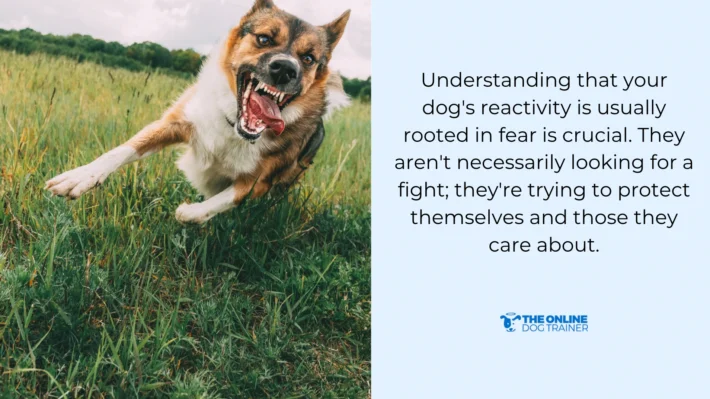
Credit: theonlinedogtrainer.com
Frequently Asked Questions
What Triggers A Dog To Be Reactive?
A dog can become reactive due to various triggers. Common triggers include unfamiliar people, other animals, or loud noises. Lack of socialization or past trauma can also contribute. Identifying these triggers is essential for effective training and management.
How Can I Calm My Reactive Dog?
To calm a reactive dog, maintain a calm demeanor yourself. Use positive reinforcement and reward calm behavior. Create a safe space for your dog and avoid known triggers. Consistent training and patience are key to long-term success.
Can Reactive Dogs Be Trained To Improve?
Yes, reactive dogs can be trained to improve their behavior. With patience and consistency, they learn to respond calmly to triggers. Professional trainers can offer guidance and support. Use positive reinforcement techniques for the best results.
What Training Methods Help Reactive Dogs?
Training methods for reactive dogs include positive reinforcement and desensitization. Gradually expose the dog to triggers at a safe distance. Reward calm behavior to build positive associations. Consistency and patience are crucial for success.
Conclusion
Training reactive dogs takes patience and consistency. Focus on positive reinforcement. Reward good behavior immediately. This builds trust and strengthens the bond. Stay calm during challenging moments. Dogs sense your energy and react accordingly. Keep training sessions short and engaging.
This helps maintain their interest. Consult a professional trainer if needed. They provide valuable guidance and support. Remember, every dog is unique. Tailor your approach to their needs. Celebrate small victories along the way. Progress might be slow, but it’s rewarding.
With time and dedication, you can help your dog thrive. Enjoy the journey together.