Can People Hear Dog Whistles: Unveiling the Truth
Senior Canine Nutritionist & Dog Behavior Specialist at Cozy Dog Go Wellness Lab
Have you ever wondered if you can hear dog whistles? Maybe you’ve seen someone use one and noticed that your furry friend reacts, but you don’t hear a thing.
You’re not alone in your curiosity. Dog whistles are a fascinating tool that taps into the extraordinary world of sound frequencies. They can seem mysterious, almost magical, because they operate on a level we can’t perceive. But why can’t we hear them, and what makes them so effective for dogs?
Imagine unlocking the secrets of sound and discovering how these whistles work. This knowledge could transform the way you communicate with your pet, enhancing your bond and training experiences. Dive into this article to uncover the science behind dog whistles and learn how they might change your relationship with your canine companion.
Credit: www.tiktok.com
Human Hearing Capabilities
Dog whistles produce sounds at frequencies beyond human hearing, typically above 20,000 Hz. While dogs can hear these high frequencies, most humans cannot. This is because our hearing range usually tops out around 20,000 Hz.
Humans possess fascinating hearing abilities. Our ears detect sound waves, translating them into signals our brain can understand. Yet, there’s a limit to this capability. We can’t hear everything. Some sounds are beyond our range, such as dog whistles. Let’s explore these limits and compare them to animal hearing.Limits Of Human Hearing
Human ears have a defined range. We typically hear sounds between 20 Hz to 20,000 Hz. Sounds outside this range remain unnoticed. Low-frequency sounds below 20 Hz are called infrasonic. High-frequency sounds above 20,000 Hz are ultrasonic. Dog whistles produce ultrasonic sounds. This is why humans can’t hear them. Our hearing limitations are due to the structure of our ears.Comparison To Animal Hearing
Animals have different hearing ranges. Dogs hear between 40 Hz to 60,000 Hz. They detect higher frequencies that humans can’t. This makes dog whistles effective for training. Cats also hear ultrasonic sounds, ranging from 48 Hz to 85,000 Hz. Bats have exceptional hearing, reaching up to 100,000 Hz. Each species adapts its hearing for survival. Humans and animals have unique auditory strengths.Mechanics Of Dog Whistles
Dog whistles produce high-frequency sounds. Humans usually cannot hear them, but dogs can. These tools are popular for training dogs effectively.
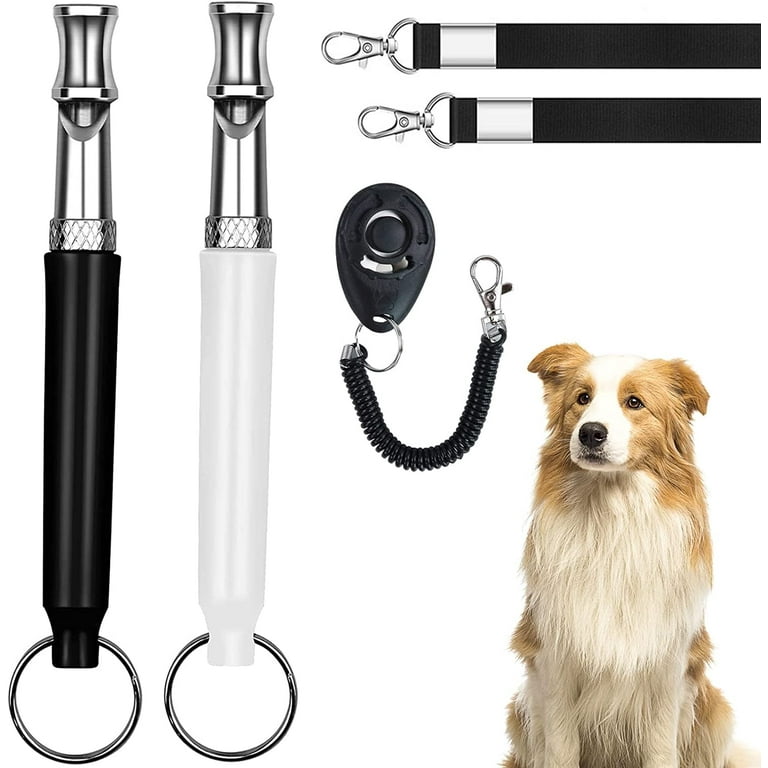
Dog whistles are tools that produce a sound at frequencies dogs can hear. Humans usually cannot hear these sounds. The mechanics behind dog whistles are intriguing. They rely on specific design and function principles.Design And Function
Dog whistles are small, often made from metal or plastic. They are designed to produce high-frequency sounds. These sounds are typically above 20,000 Hz. This frequency range is inaudible to most humans. Dogs have a wider hearing range than humans. They can hear these high-pitched sounds easily. The whistle has a narrow opening. This opening allows precise sound waves to emerge. The length and shape of the whistle affect the sound produced. Some whistles have adjustable pitches. This feature lets users change the frequency.Purpose In Training And Communication
Dog whistles are useful in training and communication with dogs. Trainers use them to signal commands from a distance. The sound is consistent and clear for dogs. It helps in teaching obedience and specific tasks. Whistles can communicate commands without distractions. This is particularly useful in noisy environments. Dogs learn to associate whistle sounds with specific actions. This association aids in efficient training. Whistles are also used in search and rescue missions. They help in guiding dogs to perform tasks effectively.Scientific Studies On Dog Whistles
Dog whistles produce sounds at high frequencies. These frequencies are often beyond human hearing. Scientists have conducted studies to understand more about these whistles. They aim to discover why humans can’t hear them and what this means for human audibility.
Research Findings
Studies show dog whistles emit sounds between 16,000 and 22,000 Hertz. Most humans hear up to 20,000 Hertz. The human hearing range decreases with age. Young people might hear dog whistles faintly. Older adults likely won’t hear them at all. Research also reveals dogs hear higher frequencies. That’s why these whistles are effective with dogs.
Implications For Human Audibility
Dog whistles demonstrate limits of human hearing. They remind us humans can’t perceive all sounds. This knowledge affects how we interact with animals. It explains why dogs respond well to commands from whistles. It can also impact how we design sound-based products. Understanding frequency limits can guide innovations in technology. It helps us ensure devices are suitable for human use.
Myths Vs. Reality
Many people wonder if humans can hear dog whistles. This curiosity often leads to confusion. Let’s explore the myths and reality around this topic.
Common Misconceptions
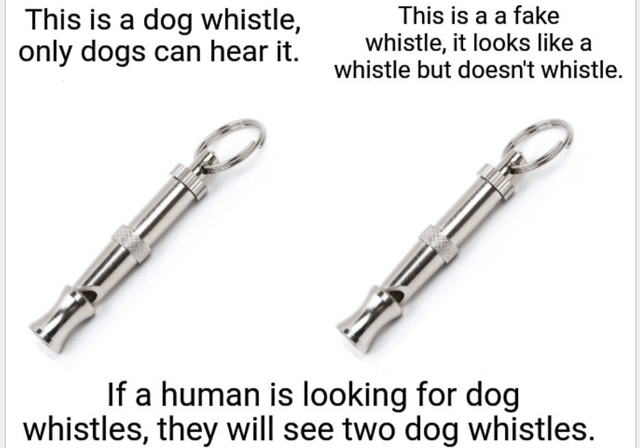
Dog whistles are often thought to be completely silent to humans. Some people believe they emit sounds only dogs can hear. This is not entirely accurate. While dog whistles produce high-frequency sounds, some humans might still detect them. Age and hearing sensitivity play a big role in this.
Another myth is that all dogs respond to dog whistles the same way. Different breeds have different hearing ranges. Not every dog will react to a whistle the same way. It’s a common misunderstanding that all dogs will immediately come running when they hear a whistle.
Clarifying The Truth
Dog whistles work by emitting sounds between 16,000 to 22,000 Hz. Some humans can hear sounds at the lower end of this range. Younger individuals often have better hearing capabilities. As people age, their ability to hear higher frequencies decreases.
Dogs have a broader hearing range than humans. They can pick up frequencies as high as 45,000 Hz. This makes dog whistles effective tools for training. Not all dogs will respond to a whistle automatically. Training is required for a dog to associate the sound with a command.
Dog whistles are not magical devices. They are simply tools to assist in communication with dogs. Understanding the science behind them helps debunk common myths.

Credit: www.amazon.com
Applications Beyond Dog Training
Dog whistles operate at frequencies humans can’t hear, but they find uses beyond pet training. These tools aid wildlife studies and serve in sound-based research, offering insight into frequency perception. Understanding dog whistles enriches our knowledge of sound communication.
The high-pitched frequency of dog whistles might seem like a niche tool for training our furry friends, but their applications extend far beyond the canine realm. These seemingly simple tools have found their way into various fields, proving that their utility is not limited to just commanding “sit” or “stay.” From technological innovations to surprising uses in different industries, dog whistles have carved out a unique niche.Use In Other Fields
Beyond dog training, dog whistles have intriguing applications in fields like wildlife research and pest control. Researchers use them to study animal behavior without disturbing the natural environment. In pest control, high-frequency sounds deter pests like rodents, offering an alternative to chemical repellents. Dog whistles are also employed in sound therapy. Some practitioners believe that these frequencies can promote mental wellness and relaxation. Have you ever considered how sound might impact your well-being?Technological Innovations
In technology, dog whistles have inspired the development of sound-based devices that operate at inaudible frequencies. For instance, ultrasonic sensors use similar principles for range finding in robotics and automotive parking systems. The entertainment industry has even dabbled with these frequencies. Certain soundtracks include inaudible tones to evoke emotional responses, enhancing the viewer’s experience. What if the next movie you watch uses sounds you can’t hear to influence how you feel? These examples showcase how something as simple as a dog whistle can inspire technological advancements. Who knew that a tool for training pets could lead to innovations that touch various facets of modern life?Future Research Directions
Exploring if humans can hear dog whistles opens fascinating research paths. Investigate frequency ranges and human auditory limits. Study individual differences in hearing capabilities across demographics.
The intriguing world of dog whistles opens up numerous avenues for future research, especially as our understanding of sound and technology continues to evolve. While current knowledge suggests that dog whistles operate at frequencies beyond human hearing, there is still much to learn about the nuances of sound perception. This unexplored territory offers exciting possibilities for scientists and researchers eager to push the boundaries of acoustic science.Exploring New Possibilities
Imagine a world where you could tune into sounds previously inaccessible to human ears. Researchers are continually seeking ways to bridge the gap between human and canine auditory capabilities. Could future innovations enable us to hear what our dogs hear? Studies might focus on how different frequencies affect both dogs and humans. By understanding these effects, we could develop training tools that enhance communication between you and your furry friend. This could lead to more effective training methods and a deeper bond with your pet.Advancements In Sound Technology
The rapid pace of technological advancement means that sound technology is constantly improving. New devices are being developed that might someday allow you to hear frequencies previously thought impossible. Imagine a smartphone app that could simulate the sound of a dog whistle for human ears, opening up a new dimension of sound perception. Such technology could have implications far beyond dog training, potentially impacting how we understand and interact with our environment. As researchers continue to push these technological boundaries, you might find yourself experiencing sound in ways you never thought possible. What new insights could this bring into your everyday life? The potential for discovery is limitless, and the future of sound technology is an exciting frontier to watch.Frequently Asked Questions
Can Humans Hear Dog Whistles?
Humans typically cannot hear dog whistles because they emit sounds in the ultrasonic range. This range is above the human hearing threshold. While dogs can hear frequencies up to 65 kHz, humans generally can only hear up to 20 kHz.
This makes dog whistles inaudible to us but perfectly audible to dogs.
Why Are Dog Whistles Used?
Dog whistles are used primarily for training and communication with dogs. They emit a high-frequency sound that dogs can hear clearly. This allows trainers to issue commands without disturbing others. The whistle’s consistent tone helps dogs recognize specific commands, making training more effective and efficient.
Do Dog Whistles Hurt Dogs’ Ears?
Dog whistles, when used correctly, do not hurt dogs’ ears. They are designed to be heard without causing discomfort. However, using them excessively or too close can be bothersome. It’s important to use dog whistles responsibly, ensuring the sound is clear but not overwhelming for the dog’s sensitive hearing.
Can Dog Whistles Stop Barking?
Dog whistles can help in training dogs to stop barking. They work by capturing the dog’s attention with a sound they recognize. Consistent training with positive reinforcement can reduce unwanted barking. However, success depends on consistent training and understanding the underlying cause of the barking.
Conclusion
Dog whistles are designed for canine ears, not human ones. Most people can’t hear them. This is due to their high frequency. Dogs, however, can hear these sounds. Their hearing range is broader than ours. Understanding this can help in training pets.
It ensures clear communication. Use dog whistles responsibly. They shouldn’t cause discomfort to pets. Always observe your pet’s reaction. This ensures their comfort and wellbeing. Curious? Test a dog whistle yourself. See if you hear anything. Most likely, silence will greet you.
But your dog might respond eagerly. A simple tool, yet very effective.

Similar Posts